Snowcat Skiing in Patagonia: What It Is, What It Costs and Who It Suits
Snowcat skiing uses a tracked vehicle to reach untouched terrain without a helicopter. Here is how it works in Patagonia, what it costs and how it compares with heli-skiing.
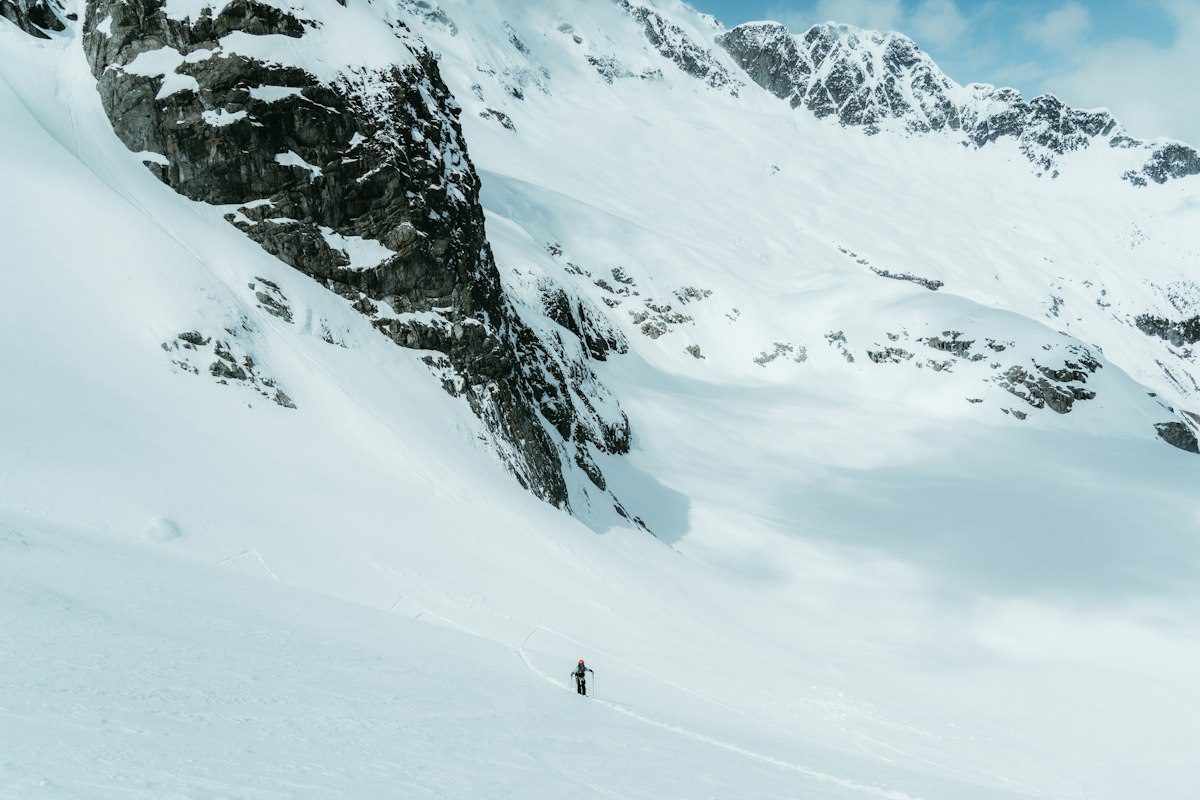
Snowcat skiing means riding a tracked vehicle up to untouched terrain, skiing down, and repeating, with a guide choosing the lines. In Patagonia it is a smaller, more bespoke option than heli-skiing, usually arranged privately rather than sold as a standard product. It costs less than a helicopter day, runs in weather that grounds helicopters and suits strong intermediate and advanced skiers who want fresh snow without long uphill climbs.
Quick Answer: Snowcat skiing in Patagonia
- What it is: guided skiing with a tracked cat taking you uphill
- Typical day: 4-8 descents of 300-600 vertical metres, depending on snow
- Estimated cost: roughly $350-$700 USD per person per day, depending on group size
- Group size: small private groups, usually 4-10 skiers
- Ability needed: confident on blue and black runs in variable snow
What is snowcat skiing and how does it work?
A snowcat is a tracked grooming-style vehicle with a cabin that carries a small group to high terrain on the mountain. A guide leads each descent, checks the snow and picks the line. At the bottom the cat meets you and takes you up again.
The result is more vertical than ski touring in the same time, without the effort of skinning. A guide still manages the avalanche terrain, so it is guided backcountry, not resort skiing. Our avalanche safety guide explains why that matters.
How does snowcat skiing compare with heli-skiing?
Snowcat skiing is cheaper, less weather-sensitive and slower, while heli-skiing reaches more remote terrain with more vertical. Here is the comparison in plain lists.
Snowcat skiing
- Cost: roughly $350-$700 USD per day
- Vertical per day: moderate, limited by the cat's speed
- Weather: can run in conditions that ground helicopters
- Terrain: bounded by roads and tracks
Heli-skiing
- Cost: $700-$1,200 USD per day, as covered in our heli-skiing guide
- Vertical per day: high, with 4-6 drops
- Weather: grounded by low cloud and wind
- Terrain: far more remote
Is snowcat skiing available in Patagonia?
Availability is limited and varies by season, because Patagonia does not have the large commercial cat-skiing industry of Canada or Japan. Most options are private arrangements near the major mountains, set up with local operators and guides who know the permitted terrain and landowners.
That is why we handle it through our custom experiences. We confirm access, vehicles and certified guides before you commit, rather than promising a product that may not exist that week.
What terrain and snow can you expect?
Expect open bowls above treeline, lenga forest on the lower flanks and long fall lines of several hundred vertical metres. The snow ranges from light powder after a cold storm to dense wind-affected snow after a warm spell. Patagonian snow is often heavier than Rockies powder, a point we make in our comparison of Patagonia and the Alps and Rockies.
Wind is the main limiter. Strong westerlies can scour the upper mountain, so the guide may keep you in sheltered terrain on those days.
What should you bring?
Bring what you would for a day of resort skiing plus a few safety extras. The operator usually supplies avalanche transceivers, shovels and probes, but you should confirm.
- Wide skis, ideally 95-110 mm underfoot
- Warm layers and a spare mid-layer
- Goggles in two lenses for flat light
- Lunch and water in a small pack
- Travel insurance covering guided off-piste skiing
Who is snowcat skiing right for?
It suits strong intermediates to advanced skiers who want untouched snow with less effort than touring. Beginners will struggle in variable snow, and experts chasing 1,000-metre drops may prefer a helicopter. Groups of friends often love it because the cat is also a social space.
If you are choosing between options, our guide to off-piste skiing in Patagonia explains which level of terrain fits which skier, and our off-piste experiences show what we run every season.
How do you book a snowcat day and what should you ask first?
Book early and ask direct questions, because capacity is small and snow decides the schedule. We suggest asking every operator the same five things before you pay a deposit:
- Who is the lead guide, and what certification do they hold (see our post on Argentina mountain guide certifications)
- How many skiers per guide, with 4-6 being a comfortable ratio
- What is the cancellation and weather policy if the cat cannot run
- Which safety gear is included and what you must bring yourself
- How many hours you actually spend skiing versus riding and eating
A good operator answers all five plainly. Vague answers are a warning sign. A flexible plan helps too: keep two or three days free in a week so you can pick the best snow instead of a fixed date.
Frequently Asked Questions
Is snowcat skiing safer than ski touring? Not automatically. Avalanche terrain is the same, but a guide, rescue gear and radio contact reduce risk. Insurance is still essential.
Can I snowcat ski if I am an intermediate skier? Yes, if you are comfortable on blue and some black runs in ungroomed snow. Tell us your level and we will pick terrain to match.
How much does a day cost compared with a lift pass? A lift pass at Cerro Catedral is roughly $50-$80 USD, so a snowcat day is several times more, in exchange for guiding and untracked snow.
When is the best time for snowcat skiing? Mid-July to mid-August generally has the best snow, but a fresh storm matters more than the calendar.
This guide was written by the Ski Patagonia Co. team, based on many seasons of guiding off-piste in the Andes around Cerro Catedral.
Ready to plan your own week on the mountain? Plan My Trip and tell us what you want from the season, and we will build it around you.
Hero photo by Matthew Stephenson on Unsplash