Argentina Mountain Guide Certifications Explained: AAGM, IFMGA and What to Look For
Booking a guided ski day in Patagonia? Here is the practical guide to AAGM, UIAGM and IFMGA certifications, what they actually mean, and the questions to ask before you pay for a guide.
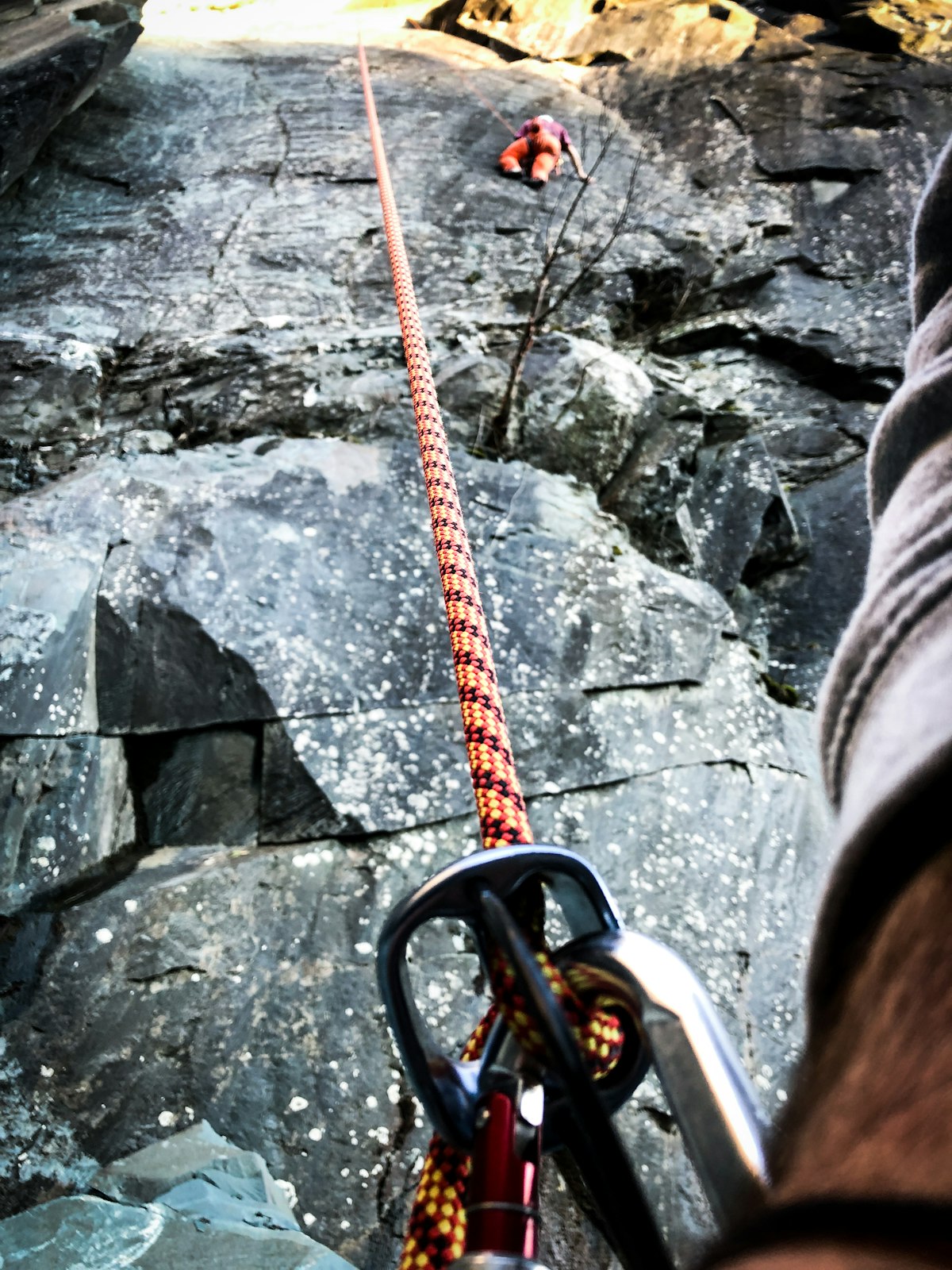
When you book a guided off-piste or backcountry ski day in Argentina, the person you are trusting with the snowpack call, the route choice and your safety has a credential -- or, sometimes, does not. International skiers rarely think to ask. The Argentine guide industry has a clear certification ladder, and knowing where your guide sits on it is one of the most useful things a foreign skier can do before paying for a trip.
This post is the version we wish more guests arrived with. We will cover the two certifications that matter, what each one actually means, when you genuinely need a certified guide versus when you do not, the questions to ask before booking, and the unique things about how guiding works in Argentina.
The Two Certifications That Matter
In Argentina there are two acronyms worth memorizing.
AAGM -- Asociacion Argentina de Guias de Montana. The Argentine professional association for mountain guides. AAGM membership requires completion of the national guide training program through ENAM (Escuela Nacional de Guias de Montana), passing tested skills in rock, ice, ski and high-mountain terrain, and ongoing continuing education. AAGM is the baseline credential for any professional working as a mountain or ski guide in Argentina.
IFMGA / UIAGM -- the International Federation of Mountain Guides Associations (English) or Union Internationale des Associations de Guides de Montagne (French). The global gold standard. An IFMGA-certified guide has cleared the highest internationally recognized bar for combined rock, alpine, and ski guiding. It is the same credential carried by senior Chamonix guides, Canadian ACMG/IFMGA guides, and AMGA-certified American guides who have completed the full track.
In Argentina, IFMGA-certified guides are AAGM members who have additionally completed the international certification process. There are not many of them in the country -- somewhere in the low double digits is the right order of magnitude. Several of them work in Patagonia.
What AAGM Actually Means
An AAGM mountain guide has formally trained for several years in:
- Avalanche assessment and snowpack analysis
- Rope work for crevasse rescue and steep terrain belays
- Ski guiding technique, including off-piste and ski touring
- Wilderness first aid and emergency response
- Local terrain knowledge and route planning
AAGM guides are insured for professional liability while working in their certified discipline. They can legally lead clients on terrain that requires real judgment -- avalanche-prone slopes, glaciated terrain, anything beyond marked piste.
For most resort-adjacent off-piste skiing in Patagonia, an AAGM-certified ski guide is exactly the right level. See Off-Piste Skiing in Patagonia for what guided off-piste days typically include.
What IFMGA Adds
IFMGA certification adds two practical things on top of AAGM.
International recognition. An IFMGA guide is licensed to lead clients on technical terrain in any IFMGA-affiliated country. If you are doing a high-altitude or technical objective that crosses into Chile or that mirrors something you would book in Chamonix or Banff, the IFMGA credential is how the international ski-guide community vouches for them.
Higher technical ceiling. IFMGA training pushes deeper into glaciated terrain, technical alpinism, and ski mountaineering at altitude. For a typical Bariloche off-piste week, you do not need this. For a multi-day ski-touring traverse on the Hielo Continental Patagonico or a peak ascent like Tronador, you do.
Ask for IFMGA when the trip itself is technical. Do not pay an IFMGA premium for terrain that does not require it.
When You Need a Certified Guide vs When You Do Not
Be honest with yourself about where you are skiing.
You do not strictly need a certified guide for: lift-served piste skiing at Cerro Catedral, Cerro Chapelco, Cerro Castor or any in-bounds resort. Resort piste is patrolled, the terrain is signed, the avalanche control is done before lifts open. A ski school instructor (a different credential, not the same as a mountain guide) is fine if you want lessons.
You do need a certified guide for: any off-piste skiing outside resort boundaries, ski touring approaches, hut-to-hut tours in the lake district, anything labeled "backcountry," anything involving avalanche-prone terrain, and any trip onto a glacier. Skipping a guide on this terrain to save money is not a frugal choice -- it is the kind of decision that costs more than money on a bad day. See Avalanche Safety in the Andes for the case for hiring local expertise.
Borderline cases: the side-country runs at Catedral that you reach with a short hike from the boundary rope. Local AAGM guides know which lines have real avalanche exposure on a given day. International skiers who solo this terrain on a windy Patagonian afternoon are accepting a risk they often do not understand.
Questions to Ask Before You Book
A legitimate guide will answer all of these in their sleep. If a "guide" stumbles on any of them, walk away.
1. Are you AAGM-certified? Can I see your AAGM number?
2. What is your professional liability insurance carrier?
3. Are you carrying current avalanche rescue gear today -- transceiver, shovel, probe?
4. What is your snowpack assessment for the terrain we are planning?
5. What is your turnaround plan if the weather changes?
6. Have you guided this exact route in the past 30 days?
These are not paranoid questions. These are the questions any North American or European IFMGA guide will expect from a thoughtful client. Asking them sets the right tone for the day.
Insurance and Liability in Argentina
Liability culture in Argentina is real but less litigious than in the US. AAGM guides carry mandatory professional liability insurance. As a foreign client, your own travel insurance should cover off-piste and backcountry skiing -- which most standard travel policies exclude unless you specifically add a winter sports rider. Confirm this before you book.
For what entry and insurance look like for foreign skiers more broadly, see Argentina Entry Requirements for Skiers.
How We Handle Guide Selection
When we plan a guided week, we match the guide to the trip. For a family ski week with a half-day off-piste add-on, an AAGM ski guide is the right call. For a hut-to-hut touring week or a Tronador objective, we work only with the IFMGA-certified guides we know personally and have skied with for years. We do not subcontract those days to whoever has an open Tuesday.
This is one of the reasons we run the trips we run. The guide is not a faceless line item -- it is the person who decides whether your day is fun, useful and safe. We treat it that way. See our off-piste experiences and heli-ski experiences for the kinds of trips where this matters most.
Honest Take
For 90 percent of international ski guests in Patagonia, AAGM is the right credential. IFMGA is for the other 10 percent who are doing genuinely technical objectives. Booking through a reputable outfit -- as opposed to negotiating directly with a hand-painted "guide" sign at the base of Catedral -- is the simplest way to ensure the guide is properly certified, insured and equipped.
If you want help putting together a guided Patagonia week with the right level of credential for the terrain, plan your trip and we will set you up with guides we know personally.