Off-Piste Skiing in Patagonia: What You Actually Need to Know
Patagonia's off-piste terrain is world-class but misunderstood. Here is what the sidecountry and backcountry are actually like, what you need to access them, and how our guides make it work.
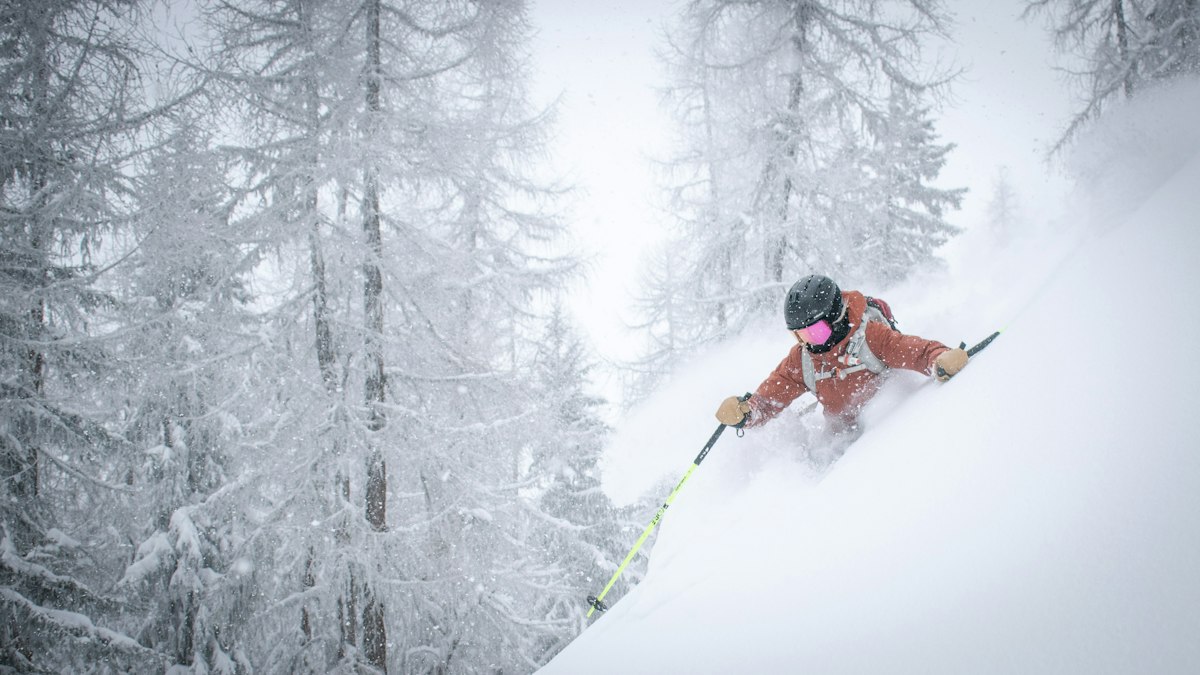
Patagonia's off-piste skiing does not look like anything you have seen in Europe or North America. The terrain is raw, the access is often unmarked, and the snow behaves differently than Alpine powder. That is exactly why it is worth the trip.
Here is what you actually need to know before you go.
What off-piste means in Patagonia
In the Alps, off-piste often means ducking a rope beside a marked run. In Patagonia, off-piste means something different. At resorts like Cerro Catedral, the sidecountry includes dense lenga beech forests, volcanic gullies, and open bowls with no tracks and no crowds.
Beyond the resort boundary, the backcountry opens up into genuinely remote terrain — valleys with no cell service, ridgelines with views to Chile, and descents that end at frozen lakes.
The terrain
Tree skiing in lenga forests. The lenga beech trees that cover the lower slopes are perfectly spaced for skiing — wide enough to link turns, dense enough to hold snow when the wind strips the upper mountain bare.
Volcanic couloirs and chutes. The Andes here are volcanic. You will find steep couloirs with consistent fall lines and natural funnels that channel you into open run-outs.
Open alpine bowls. Above the treeline, wide bowls and ridges hold some of the best powder skiing in the Southern Hemisphere on still days after a storm.
What you need
You need a guide. This is not optional. Patagonian off-piste is largely unmapped, unmarked, and unpatrolled. Our off-piste packages include IFMGA-certified guides who know this specific terrain intimately.
You also need avalanche safety equipment: beacon, probe, and shovel. We provide these on all guided trips.
When to go
The best off-piste conditions typically occur in July and August, when the snowpack is deepest and most stable. Tree skiing remains excellent throughout the season.
Is it right for you?
If you are a confident intermediate skier who can handle ungroomed terrain and wants to see what Patagonia looks like beyond the resort boundary, the answer is yes.
If that sounds like you, let us know what you are looking for and we will match you with the right guide and terrain for your ability.