How Patagonian Ski Resorts Compare to the Alps and Rockies
Patagonia vs the Alps vs the Rockies — an honest comparison of terrain, snow, cost, and the experience itself, from people who ski all three.
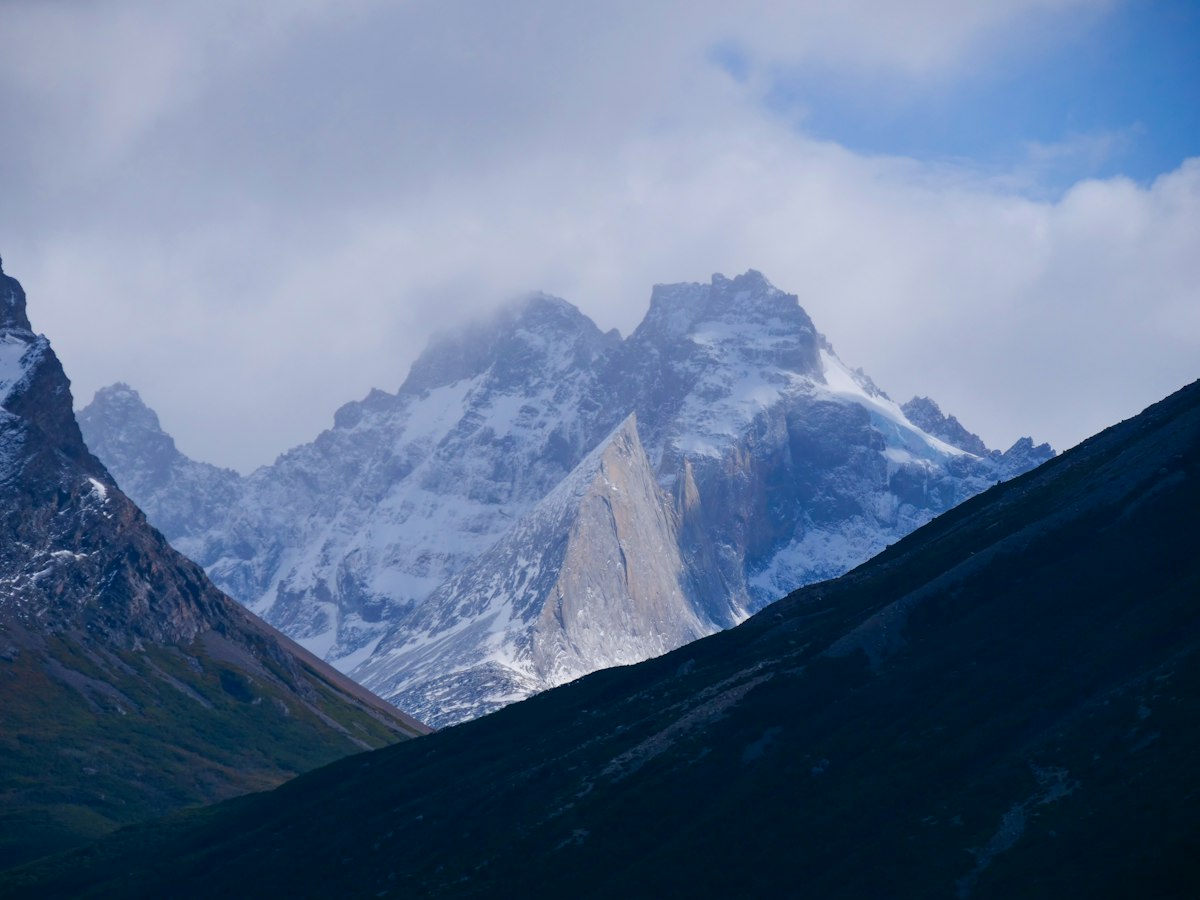
Travelers planning a ski trip to Patagonia almost always ask the same question: how does it actually compare to the Alps or the Rockies? It's a fair question. If you're going to fly 12-15 hours and ski in the southern hemisphere off-season, you want to know what you're getting — and what you're giving up.
We've guided guests who ski Verbier every February, Chamonix every March, and Jackson or Whistler every January. Their honest reactions to skiing here have shaped how we answer this question. The short version: Patagonia isn't trying to beat the Alps or Rockies at their own game. It's a different game entirely.
Vertical and Terrain Size
The Alps win on raw scale. Verbier's 4 Vallées links over 400km of pistes across four valleys. The Three Valleys in France pushes 600km. Patagonia doesn't come close — Cerro Catedral, our biggest resort, has about 120km of marked terrain. Las Leñas and Chapelco are smaller still.
The Rockies are closer in scale. Vail, Whistler, and Big Sky each offer more lift-served acreage than any Patagonian resort. But once you factor in lift-accessed sidecountry and easy bootpacks, Catedral and Las Leñas open up dramatically. The on-piste numbers undersell what's actually skiable.
Verdict: Alps and big Rockies resorts win on lift-served piste size. Patagonia wins on accessible, ungroomed terrain per skier — and on how much of it you can actually have to yourself.
Snow Quality
This surprises people. Patagonia's snow is more varied than the Rockies — drier and lighter than Alpine snow most days, but punctuated by big maritime storms that dump heavy, cement-like loads.
The Rockies (Utah, Colorado, BC interior) deliver more consistent, drier powder. That's their main edge.
The Alps get pounded by Atlantic storms and tend toward heavier, denser snow — better for stability, harder on tired legs.
Patagonia is closer to the Rockies than the Alps in texture, but with a wilder rhythm: 10cm one day, 80cm the next, then a week of sun.
Verdict: Rockies for consistency. Patagonia for the dramatic storm-and-bluebird cycles. See our week-by-week season guide for what to expect when.
Lift Infrastructure
The Alps are decades ahead. High-speed gondolas, heated chairs, fast detachables on every major mountain. The Rockies aren't far behind, especially at the corporate-owned megaresorts.
Patagonia is honest about its infrastructure: a mix of modern gondolas, slow chairs, and a few surface lifts that feel charmingly retro. Lift lines exist on weekends but rarely top 10 minutes mid-week. There's no Epic-Pass-style crowding — even on the busiest days at Catedral, you can find empty chairs by 11am.
Verdict: Alps and corporate Rockies for infrastructure polish. Patagonia for shorter lines and no megaresort feel.
Off-Piste and Backcountry
This is where Patagonia genuinely competes — and often wins. The off-piste at Cerro Catedral is largely unregulated. There are no rope drops, no patrol-cleared zones, no designated 'slackcountry.' If you can see it and it's in-bounds, you can ski it. Las Leñas is similar but steeper and more committing.
The Alps have spectacular off-piste, but it's tracked out within hours of any storm, and access often requires a guide due to glaciated terrain.
The Rockies have strong inbounds off-piste (think Jackson, Snowbird, Revelstoke) but most truly wild terrain requires resort-permit hikes or a backcountry tour.
Patagonia's edge: the ratio of skiers to terrain. Storm days here see a fraction of the people that hit a Wasatch resort.
Verdict: Patagonia is the value pick if untracked off-piste matters to you. See our deeper take on off-piste skiing in Patagonia for the specifics.
Cost
Lift tickets in Patagonia run roughly USD 60-90/day at the major resorts — about half what you'll pay at Vail or Verbier walk-up. Lodging in Bariloche or San Martín de los Andes is dramatically cheaper than equivalent Alpine or Rockies towns. A nice four-star hotel runs USD 180-250/night versus USD 400-700 in Aspen or Zermatt.
The big-ticket item is airfare. A direct flight from JFK to Buenos Aires is comparable to JFK to Geneva, but the connecting flight to Bariloche adds another USD 200-400.
For the full cost picture see our Patagonia ski trip cost breakdown.
Verdict: Patagonia wins handily on in-country costs. The Alps and Rockies win on travel time for North American and European skiers.
The Experience Itself
This is where the comparison becomes apples-and-oranges.
The Alps offer skiing as a centuries-old cultural institution — village après in a 400-year-old guesthouse, mountain refuges with five-course lunches, a sense that you're participating in something old.
The Rockies offer skiing as a polished, world-class consumer experience — well-engineered, predictable, and convenient.
Patagonia offers skiing as part of a wilder South American trip. You're in a country that's still figuring itself out, in a region that feels remote even when you're in town. Lunches are long, the wine is local, and nobody's in a hurry. After skiing, you might end up at an asado that goes until midnight, or wandering Bariloche's chocolate shops and craft breweries.
Verdict: The Alps for tradition. The Rockies for polish. Patagonia for adventure and texture.
When Patagonia Makes the Most Sense
Patagonia is the right pick if you want to ski during the northern summer (June-September), if you're a strong intermediate or above looking for uncrowded terrain, if you value cultural experience as much as the skiing itself, or if you want untracked snow without paying heli-ski prices for it. For the truly committed, our heli-skiing in the Andes is a fraction of the Canadian or Alaskan equivalent.
It's the wrong pick if you're a beginner who needs the polished ski-school infrastructure of a Vail or a Méribel, if you want maximum lift-served vertical, or if you can't commit to at least 8-10 days of travel.
The Honest Take
Nobody who skis Patagonia comes back saying it's 'better' than the Alps or Rockies. They come back saying it's different — and that the difference is what made the trip worth taking. Less crowded. More raw. Cheaper. Stranger. More memorable.
If you've already done the European and North American circuits and want something that feels like a real adventure again, this is where to go.
Ready to see how it compares for yourself? Plan your custom Patagonia ski itinerary and we'll build a trip that highlights what makes the Andes worth the flight.