Sun, UV and Goggles: How to Protect Your Skin and Eyes Skiing in Patagonia
What SPF, goggles and lip balm you need for skiing in Patagonia, and why UV is stronger on snow than most skiers expect.
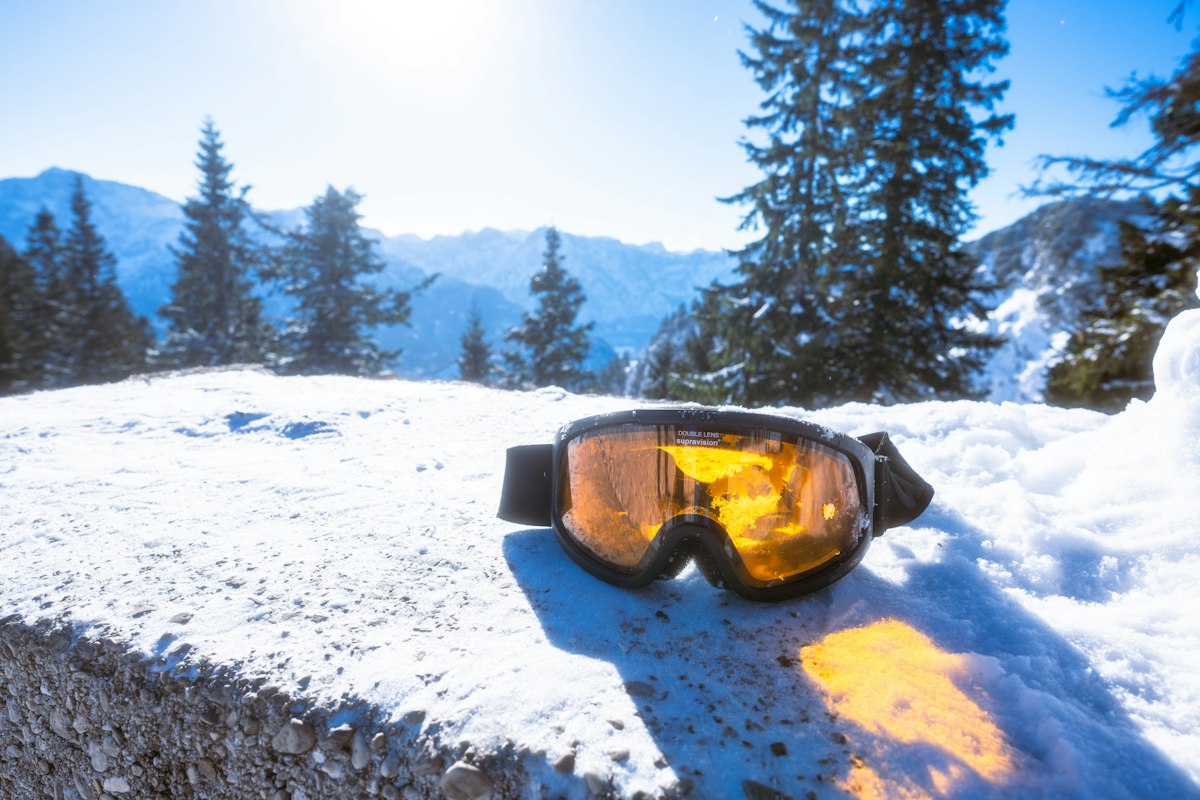
You need broad-spectrum SPF 30 or higher on every ski day in Patagonia, plus UV-rated goggles and lip balm with SPF. Sun exposure is strong on snow because the surface reflects a large share of ultraviolet light, and UV rises roughly 10 percent for every 1,000 m of altitude gained. Patagonian winter days are often cold and windy, which hides the sun's strength and makes burns easy to miss.
Quick Answer: Sun protection for skiing in Patagonia
- Sunscreen: SPF 30 to 50, broad-spectrum, reapplied every 2 hours
- Goggles: Category 2 or 3 lenses for sun, Category 1 or clear for flat light
- Sunglasses: wrap-around, UV400, for lift rides and lunch
- Lip balm: SPF 15 or higher, reapplied at every lift break
- Peak sun hours: about 11:00 to 15:00, even in July
Why is the sun so strong when you ski in Patagonia?
The sun feels weak in winter, but snow reflects up to 80 percent of UV light, so you are hit from above and from below. At Cerro Catedral the lifts reach above 2,000 m, which adds more exposure than a sea-level beach on a bright summer day.
Patagonia also sits under a thin patch of the ozone layer in the Southern Hemisphere spring. That matters most in September and October, when the sun climbs higher and the snow is still bright. Our spring skiing guide explains why those months are underrated, and sun care is part of the deal.
What SPF do you need for skiing?
Use SPF 30 as a minimum and SPF 50 if you burn easily, and apply it 15 to 20 minutes before you leave the lodge. A broad-spectrum formula blocks both UVA and UVB, and a stick or cream formula stays on better in the cold than a spray.
Cover the places people forget: under the chin, the nose, the ears, the back of the neck and the gap between goggles and helmet. Cold wind dries sunscreen quickly, so reapply at lunch. A small tube in your jacket pocket beats a large bottle at the hotel. Cold can also thicken lotions, so keep the tube inside a warm pocket.
Which goggles and lenses should you choose?
Choose goggles with 100 percent UV protection and a lens matched to the light, usually Category 2 for mixed conditions and Category 3 for bright days. Many guests bring two lenses, or a pair of goggles with an interchangeable system.
Patagonian weather changes quickly, from clear blue to cloud and wind in an hour, so a flexible setup helps. If you ski in a storm or low cloud, you will want a lens that boosts contrast. Our guide to skiing in a whiteout at Cerro Catedral explains how to handle flat light.
Can you get snow blindness while skiing?
Yes, but it is rare and mostly avoidable. Snow blindness (photokeratitis) is a sunburn of the surface of the eye, and it can happen after a few hours without eye protection on bright snow. Symptoms usually appear hours later and include pain, tearing and sensitivity to light.
If you lose or break your goggles, borrow a pair or buy a cheap pair at the base the same day. Wearing sunglasses on the chairlift and goggles on the run is a good routine. If symptoms appear, rest in a dark room and see a doctor if they last more than a day. Our guide to what to do if you are injured skiing in Argentina lists clinics near the main resorts.
What else belongs in a sun kit for a ski week?
A good sun kit is small and cheap, and it saves the trip if a burn would otherwise keep you indoors. Pack these items:
- Sunscreen stick for the face: easier to apply with gloves nearby and less likely to leak
- Lip balm with SPF: lips have no melanin protection and burn fast
- Neck gaiter or buff: covers the neck and chin without extra sunscreen
- Spare goggles or lenses: one failure should not end your day
- After-sun gel or aloe: useful at the end of a first bright day
Our full Patagonia packing list covers the rest of your gear, and our list of packing mistakes shows what guests regret leaving at home.
Does a cloudy day still need sunscreen?
Yes. Clouds can let through as much as 80 percent of UV light, and the thin high-altitude air filters less of it than at sea level. Many of the worst burns we see come from cool, overcast days when guests skip sunscreen.
Wind also strips sunscreen and dries skin, so layering a moisturiser under SPF helps. When in doubt, apply it. It takes thirty seconds and costs very little compared with a week of sore skin.
Frequently Asked Questions
Can I buy sunscreen in Bariloche? Yes, pharmacies and shops in Bariloche and at the Catedral base sell sunscreen, though brands and prices vary. Bringing your own favourite from home is easier and often cheaper.
Do kids need extra sun protection? Yes. Children burn faster and are harder to keep covered, so use SPF 50, a neck gaiter and goggles from the first day. See our kids' first ski trip guide.
Should I wear sunglasses or goggles? Wear goggles while skiing and sunglasses on lifts, at lunch and on rest days. Both should block 100 percent of UV.
This guide was written by the Ski Patagonia Co. team, based on many seasons of guiding on the mountain and years of helping guests plan ski trips across Patagonia.
Want help planning gear and timing for your own week on the snow? Plan your trip with us, and explore our group ski experiences if you are travelling with friends.
Hero photo by Hansjrg Rath on Unsplash