Skiing in a Whiteout at Cerro Catedral: How to Handle Flat Light and Low Visibility
Skiing in a whiteout at Cerro Catedral is manageable with the right goggles, terrain choices and pace. Here is how our guides handle flat light and low visibility.
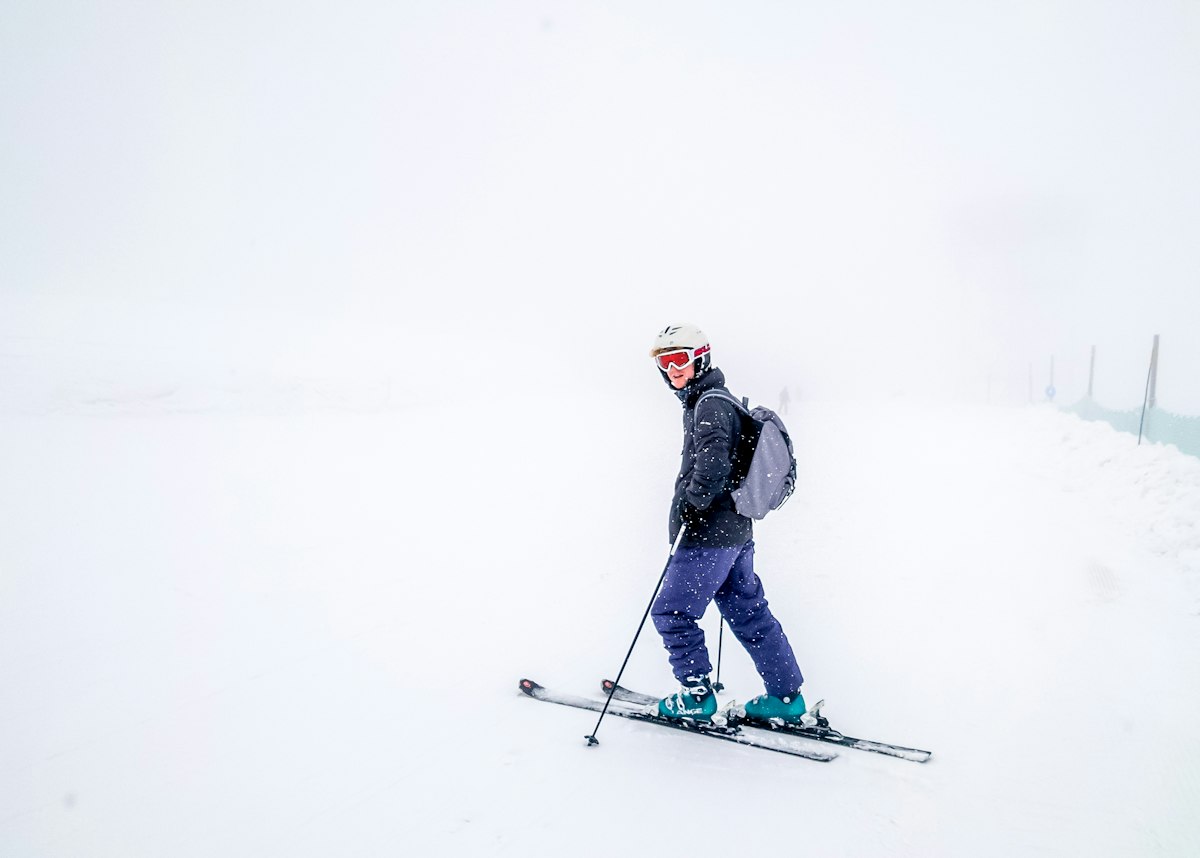
The safest way to ski in a whiteout is to slow down, stay on marked runs with trees or markers to give your eyes contrast, and ski within sight of your group. Flat light makes bumps, drops and the horizon disappear, so the main skill is reading terrain with your legs rather than your eyes. At Cerro Catedral, where low cloud can sit on the upper mountain for days, these habits turn a grey day into a good one.
What is flat light and why does it happen at Catedral?
Flat light is a condition where cloud, falling snow or fog removes all shadow, so white snow blends with white sky. Patagonian storms roll in from the Pacific and often wrap the upper mountain in cloud while the lower slopes remain clear. That is why a day can be sunny at the base and a whiteout at the top lifts.
Typical signs of flat light:
- You cannot see the contours of the snow surface in front of your skis.
- Your depth perception feels off, and small bumps surprise you.
- The line between ground and sky vanishes.
Which goggles work best for flat light?
Use a lens built for low light, such as yellow, rose or amber, and carry a second lens for bright days. Dark mirrored lenses cut too much light and make flat conditions worse. Many guides carry a spare goggle or a quick-change lens in the pocket.
A simple kit for variable days:
- A low-light lens for cloud and snowfall, usually with a high visible light transmission.
- A clear or lightly tinted backup for night skiing or heavy fog.
- A microfibre cloth for wiping, and a dry spare buff.
Keep goggles clean and well vented, since fogging is the second cause of poor visibility after weather itself.
How should I choose runs in low visibility?
Choose runs you already know, preferably lined with trees, poles or fences, and skip open bowls. Trees give your eyes a reference point, and groomed runs are predictable under your skis. At Catedral, the tree-lined lower runs are the standard fallback on cloudy days, and our guides will often send a group there first rather than risk the open upper terrain. For a related look at those sections, see Tree Skiing in Patagonia.
Good rules of thumb:
- Stay on groomed pistes until you can see 20 to 30 metres clearly.
- Avoid ridgelines and cat tracks you cannot see the edges of.
- Skip off-piste entirely if you cannot judge slope angle or snow.
What technique helps when you cannot see?
Ski slowly, keep your knees soft and look ahead of the next turn, not at your tips. Soft knees absorb surprise bumps, and shorter, rounder turns keep your speed steady. Some skiers like to follow a friend's tracks or a guide's line, which gives an instant reference for the snow surface.
Four habits that help:
- Reduce your speed by roughly a third compared with a clear day.
- Pole plant early to feel the surface.
- Ski in a staggered line with your group, not far apart.
- Stop only at the side of the run, in places others can see you.
When should I stop skiing and go inside?
Stop if you cannot see the next marker, feel disoriented, or the wind rises so lifts may close. Safety beats a few extra runs. If conditions worsen, ride down the lift you came up if allowed, or ski slowly to the nearest lodge. Wind is its own challenge, covered in Wind Day in Patagonia: What to Do When the Lifts Close.
Signs it is time to quit for the day:
- You are skiing in a straight line to avoid turning into the unknown.
- Your group has drifted out of sight.
- Your legs are tired, which makes reacting to surprises harder.
Is it worth skiing guided on a whiteout day?
A guide is the biggest advantage on a poor visibility day. Local guides know which runs hold their shape, where the trees thin out and which sections to avoid, and they can keep a group together. If you are weighing options, look at our off-piste guiding and the notes in Off-Piste Skiing in Patagonia.
Remember that avalanche terrain is a different story. If you are not sure about slope or snow stability, stay on the piste, and check Avalanche Safety in the Andes.
Frequently Asked Questions
Can I ski Cerro Catedral in a whiteout as an intermediate? Yes, if you stick to groomed, tree-lined runs and ski more slowly. Avoid open terrain until visibility improves.
What lens colour is best for flat light? Yellow, amber or rose lenses with high light transmission generally work best. Dark mirrored lenses are better for sunny days.
Do the lifts stop in poor visibility? Lifts usually keep running in cloud and snowfall but may close in strong wind, so check the resort's lift status each morning.
Is flat light dangerous? It raises your risk of falls and collisions because you cannot read the terrain. Slow down and stay with your group.
This guide was written by the Ski Patagonia Co. team, based on many seasons of guiding at Cerro Catedral in every kind of weather.
Want a guide who knows where to ski on grey days? Tell us your dates and your level, and we will plan around the mountain's moods. Start here with Plan My Trip.
Hero photo by Ed Wingate on Unsplash