What Is in a Ski Guide's Pack? Inside a Patagonia Guide's Day Bag
What is in a ski guide's pack in Patagonia? Our guides share the spare layers, repair kit and small fixes they carry every day at Cerro Catedral.
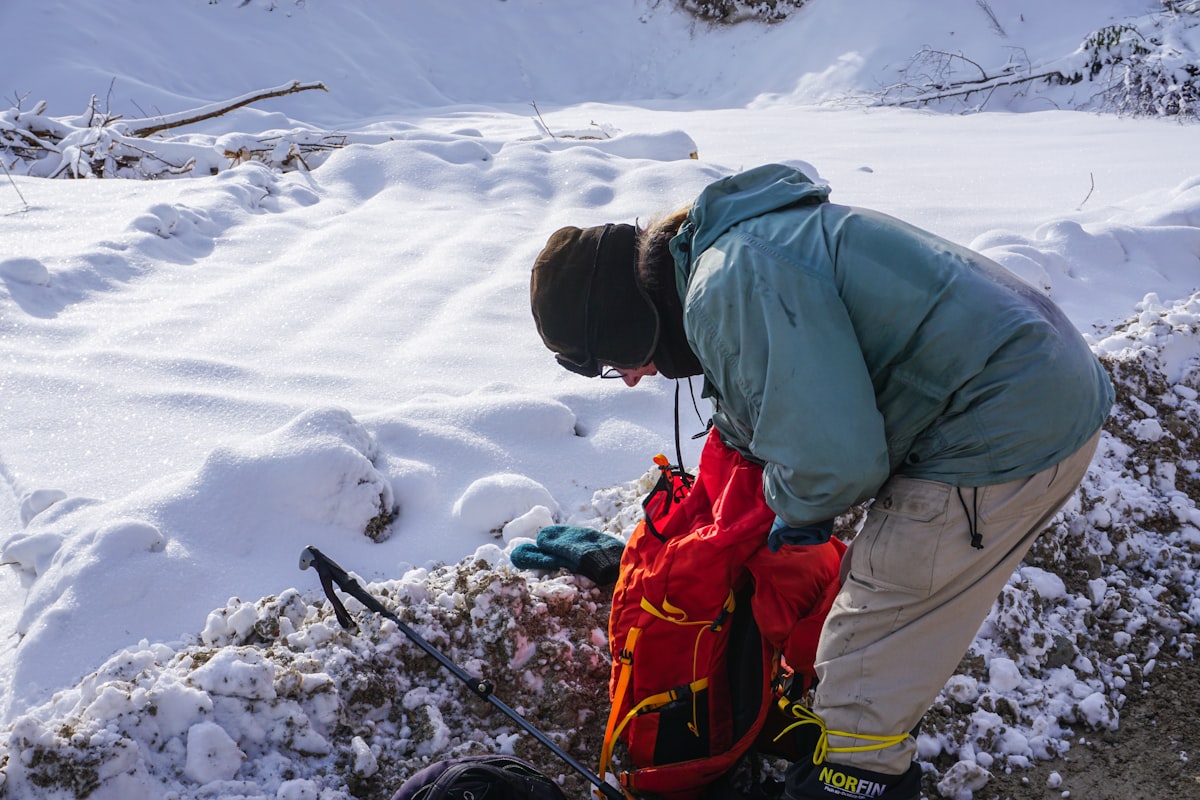
A Patagonia ski guide's day pack holds about 10 to 12 items: a spare layer, goggles, sun protection, food, water, a small first-aid kit, a radio or phone, and a few fixes for broken gear. Most of it weighs very little and almost none of it is glamorous. The point is to solve small problems on the mountain before they turn into a lost afternoon.
What is actually inside a guide's pack?
The honest answer is boring, and that is why it works. This is the kit we carry on a normal resort day at Cerro Catedral, from the top down.
- A spare insulating layer: a thin down or synthetic jacket, because a stopped group on a chairlift gets cold fast
- Spare gloves: one dry pair is worth more than any gadget
- A second pair of goggles or a clear lens: for the flat-light days we describe in our guide to whiteouts
- Sunscreen and lip balm: at altitude, UV is strong even when the day feels cold
- Food and water: roughly 1 litre of water and a few snack bars per person-day
- A small first-aid kit: blister pads, tape, a bandage, painkillers and a foil blanket
- A phone, a power bank and often a radio: coverage on the mountain is patchy
- A multi-tool and a few cable ties: for bindings, straps and zips
None of this is secret. What changes is the discipline of carrying it every single day, including the sunny ones.
Why do guides carry a spare layer on a sunny day?
We carry a spare layer because weather in the Andes turns quickly and because a stopped guest cools down much faster than a moving guide. A bluebird morning at 2,000 m can become a 40 km/h wind by lunchtime.
Mateo, one of our guides, puts it simply: "The jacket in my pack has been used maybe once a week, and never by me." Guests who are cold ski badly, make poor decisions and go home early. A spare layer fixes all three problems for about 300 g.
What are the small repair items that save a ski day?
The repair items are a multi-tool, spare screws, cable ties and strong tape, and together they weigh less than a bottle of water. They fix the failures that stop a day dead: a loose binding screw, a snapped pole strap, a boot buckle that lets go.
- Cable ties: replace a broken buckle or strap well enough to finish the day
- Tape: patch a glove, hold a pole basket or cover a hot spot on a heel
- Spare screws: for goggle frames and some binding parts
- A small ski strap: to carry a pair of skis when someone's boot or binding fails
Most of these repairs take under five minutes. Without them, a guest rides the lifts down and a good day is over.
Do guides carry avalanche gear on a resort day?
Not inside the resort boundaries, but always when we leave them. On a groomed day, we do not carry a beacon, probe and shovel. On any off-piste or backcountry outing, each person carries all three, and the guide checks every beacon before we move.
Avalanche gear is only the start of the picture. Training, terrain choice and daily snow reports matter more than the kit itself. Our avalanche safety guide explains what every skier should know, and our off-piste experiences always include a full safety briefing and equipment check.
What do guests forget that guides end up carrying?
Guests most often forget sunscreen, a lip balm, spare gloves and water. We end up lending these things nearly every week, so we carry extras.
- Sunscreen: the number-one forgotten item, even though it matters most at altitude, as we explain in our sun and UV guide
- Water: many guests rely on the mountain restaurant and are thirsty by 11 a.m.
- A tissue pack: cold noses are universal
- Cash for lunch: card terminals on the mountain sometimes go offline
If you want our full list for your own bag, see our Patagonia ski packing list.
What is the one item every guide would keep if they could only carry one?
Most guides say a spare dry layer. Some say a thermos of hot tea, because it quietly fixes cold, tired and discouraged guests at the same time.
A thermos with mate or sweet tea on a cold afternoon is a small act of hospitality, and it is also a reminder of what guiding really is. The skiing is the easy part. The job is noticing what a group needs before they ask for it, which we also talk about in what we tell every guest the night before their first ski day.
How heavy is a guide's pack?
A resort-day guide pack weighs roughly 4 to 6 kg, including water. Off-piste packs reach 8 to 10 kg once safety gear and extra layers go in. We keep it light on purpose, because a tired guide skis worse and watches the group less closely.
Frequently Asked Questions
Should I carry a backpack when skiing at Cerro Catedral? A small 15 to 20 litre pack is helpful for water, a spare layer and sunscreen, but it is not required on a short groomed day.
Do I need avalanche gear for resort skiing? No, not inside patrolled resort terrain. You do need a beacon, probe, shovel and training for any off-piste or backcountry skiing.
What is the most useful small item to bring? A spare pair of dry gloves. Wet hands end more ski days than any other single problem.
Can I borrow gear from my guide? Often yes, for small items like sunscreen or a spare layer. Please ask early rather than waiting until you are cold.
This piece was written by the Ski Patagonia Co. guiding team, drawing on seasons of day-to-day work at Cerro Catedral. The guide quote is a composite of things our team says regularly.
Want a guide who carries the small stuff so you can focus on the skiing? Plan your trip with us.
Hero photo by Goran Vinko on Unsplash