How to Ski Moguls at Cerro Catedral: Technique, Terrain and Snow Conditions
How to ski moguls at Cerro Catedral: technique, where bumps form, how snow conditions change them and when a lesson is worth it.
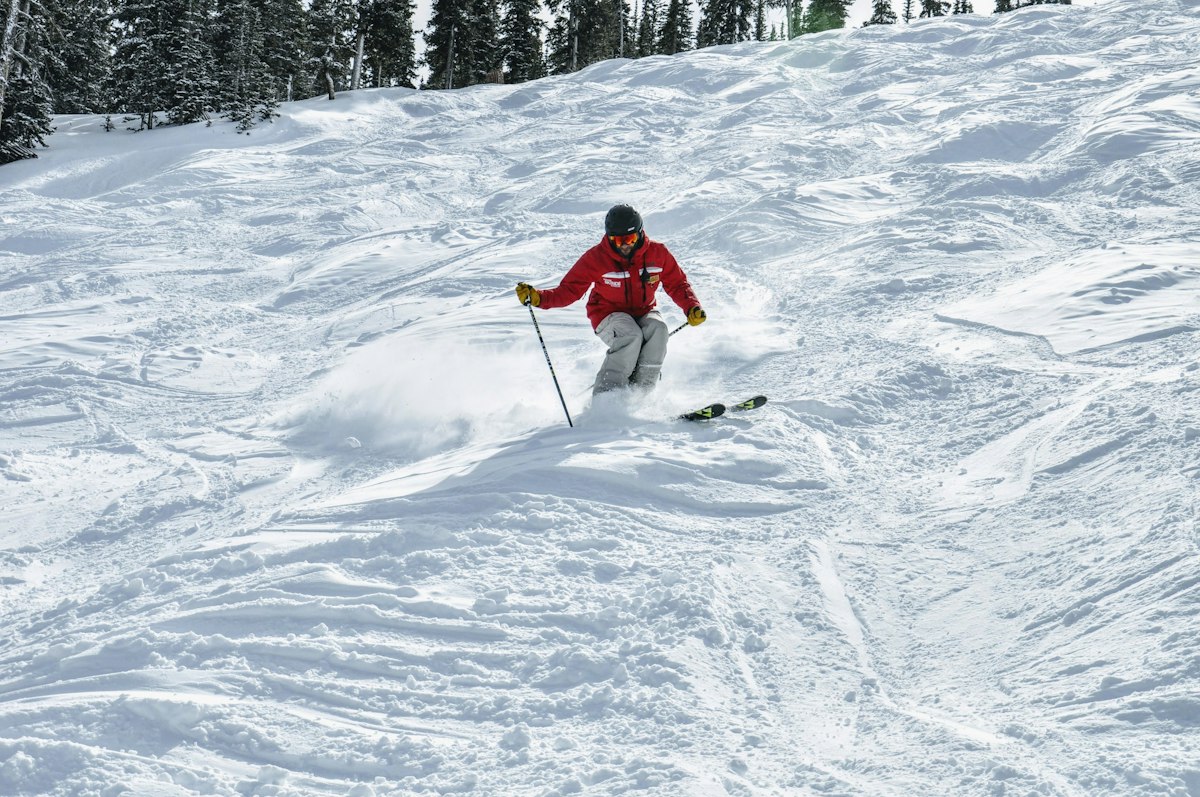
To ski moguls at Cerro Catedral, keep your upper body facing downhill, absorb each bump with your knees, and turn on the shoulder of the mogul rather than at the top. Moguls form on steeper, heavily skied runs that are left ungroomed, and at Catedral they are most common by mid-afternoon on busy days. You can learn them in a day or two with good coaching, and you should start on gentle, widely spaced bumps.
Quick Answer: Skiing moguls at Cerro Catedral
- Best technique cue: quiet upper body, active legs, eyes two bumps ahead
- Best time for soft bumps: mid-morning to early afternoon, before they freeze or ice up
- Level needed: strong intermediate and above
- Best equipment: a medium-flex ski with a waist of 80-95 mm
- Where bumps form: steeper ungroomed lines below the upper lifts
- Lesson cost: about $200-$400 USD for a private half day
What are moguls, and why do they form at Cerro Catedral?
Moguls are rounded bumps formed when many skiers turn in the same places on a steep slope. At Cerro Catedral, with 120+ runs across about 1,200 hectares and heavy traffic during school holidays, the steeper ungroomed lines develop bumps quickly. A spring day or a run that was not groomed overnight is a mogul field by lunch.
Catedral has a mix of groomed and ungroomed terrain, so moguls are optional. If you want to avoid them, ask at the lift base which runs were groomed overnight. If you want to practise them, keep an eye out for runs where the bumps look even and spaced apart.
How do you ski moguls with good technique?
Ski moguls by turning around the bump and keeping your shoulders pointed downhill. The most common mistake is leaning back and braking. Instead, treat your legs like shock absorbers: let your knees bend as you hit a bump and extend into the trough.
Here is the sequence we teach:
- Pick a line of three to four bumps ahead, not the one in front of you.
- Start the turn on the top of a bump, using the side or shoulder to pivot.
- Absorb the next bump by pulling your feet up and flexing your knees.
- Plant your pole just before the turn to time your rhythm.
- Keep your hands forward, visible in your peripheral vision.
Practice on a short run first, and stop at the edge to look back at your line.
Which runs have good bumps for learning?
Look for moderate pitches that are wide enough to choose a line. Several blue runs at Catedral develop soft bumps through the day, which is ideal for strong intermediates building confidence. Steeper black runs can be hard and icy when bumps are large.
Ask your guide or ski school which sector has good conditions that day. Our lift map guide helps you understand how the mountain is laid out, and our post on moving from blues to blacks explains how to progress. Expert skiers should also read what actually makes Catedral hard.
How does snow quality change the way you ski bumps?
Soft bumps are forgiving, while icy bumps punish mistakes. In the morning after a cold night the surface can be hard and fast, and by afternoon sun softens the snow. In Patagonia, wind can also strip the surface and leave patches of ice between bumps.
| Condition | What it feels like | What to do |
|---|---|---|
| Soft spring bumps | Forgiving, easy to carve | Take a wide line and enjoy |
| Firm morning bumps | Fast, hard on the knees | Stay on the shoulders, edge carefully |
| Wind-scoured bumps | Icy troughs, patchy snow | Choose another run or slow down |
| Fresh powder over bumps | Hidden, bouncy | Ski slower and keep your weight centered |
If the snow is very hard, consider switching to groomed terrain or off-piste. Our powder day guide covers what to ski after a storm.
What gear and fitness help most for moguls?
A medium-flex ski with a waist of 80-95 mm is the easiest all-round tool for bumps, because wide powder skis are slow to turn in a narrow trough. Boots should fit snugly, since loose boots make you late on every turn. Rental skis at the base are usually all-mountain models, which are fine for learning.
Moguls demand strong legs and core, so a few weeks of squats and lunges before your trip pays off. Our six-week ski fitness plan is a good place to start. Take regular breaks, because tired legs are the main cause of injuries on bumps.
Should you take a lesson for moguls?
Yes. A single session with a coach can fix habits that would take weeks to correct alone. A ski instructor can watch your line, give instant feedback and take you to terrain that suits your level.
A half-day private lesson at Cerro Catedral costs roughly $200-$400 USD depending on the school, and a guide can combine bumps with other terrain. Read ski lessons vs a private guide to choose the format that suits you.
Frequently Asked Questions
Are there lots of moguls at Cerro Catedral? There are moguls on steeper, ungroomed runs, especially on busy days and in the afternoon. Much of the mountain is groomed, so you can avoid them easily.
Can an intermediate skier learn moguls in one week? Yes, with coaching. Most strong intermediates can ski a gentle bump field comfortably after two or three focused sessions.
What is the best time of day to ski moguls? Late morning to early afternoon, when the surface has softened but bumps are not yet slushy.
Do I need special skis for moguls? No, but a narrower all-mountain ski is easier than a wide powder ski. Rental shops can recommend a good model.
This guide was written by the Ski Patagonia Co. team, based on many seasons of coaching and guiding at Cerro Catedral.
If you want a coach to turn bumps from a fear into a favourite, tell us about your level and we will set up the right day. Start at Plan My Trip, or explore our off-piste experiences.
Hero photo by Bradley King on Unsplash