Cerro Catedral Lift Map: A First-Timer's Guide to the Mountain
The Catedral lift network looks simple on paper. On the mountain it takes a day or two to read. Here is how to navigate it from your first morning.
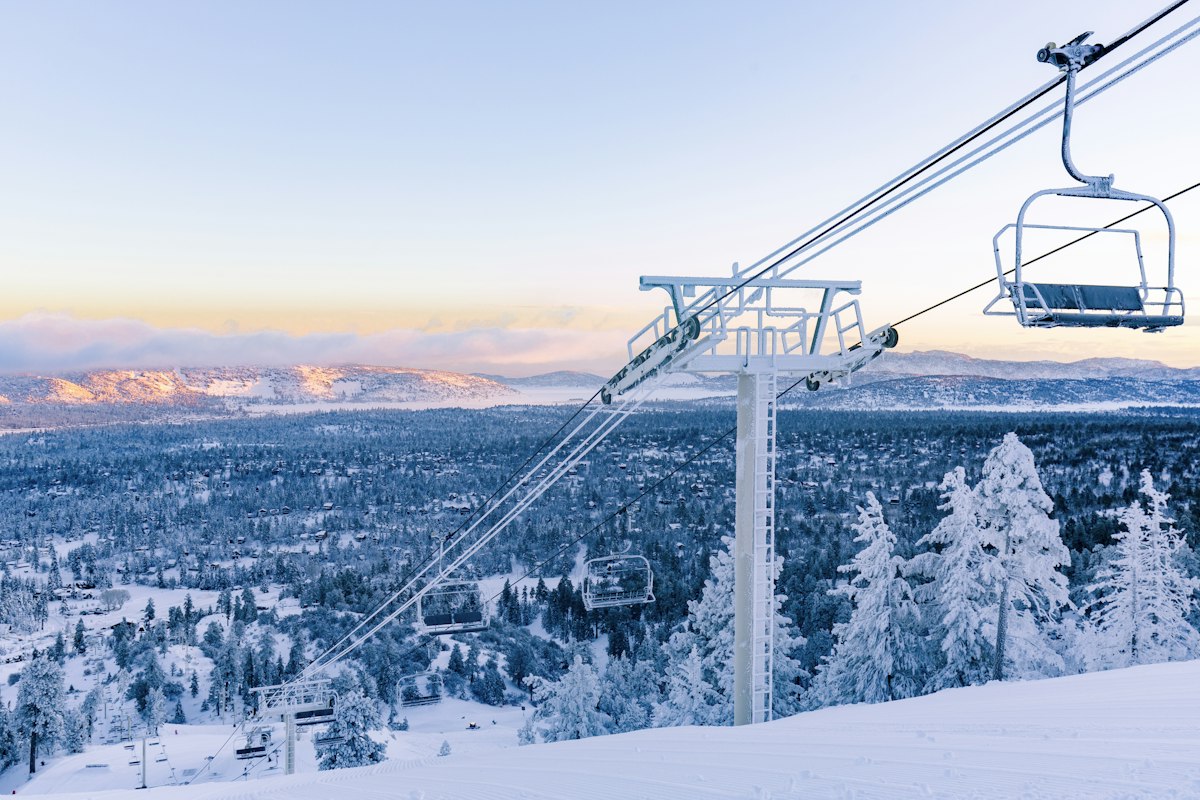
Cerro Catedral has 57 lifts. That number is true and also almost useless. What matters on your first morning is not how many lifts there are but which four or five will shape your day -- which ones get you to the good terrain, which ones close when the wind comes up, and where you get on and off the mountain efficiently. This guide is what we wish every first-timer had before they clicked in at the base.
If you're still deciding whether Catedral is the right resort for your trip, our complete guide to Cerro Catedral covers the full picture. If you're comparing it to Chapelco, our Catedral vs Chapelco breakdown will help you choose. This piece focuses on one thing only: getting around the mountain once you're there.
Start at the base: Cable Carril and Telesillacanal
There are two ways up from the base area. The Cable Carril is the original gondola -- the iconic red cabins that appear in every photo of the resort. It climbs from the village to the Punta Nevada mid-station in about twelve minutes. The Telesillacanal is a high-speed detachable quad that runs parallel and is faster, but it starts from a slightly different point in the base village. On busy weekends the Cable Carril line moves deceptively slowly because the cabins hold only six people. If the queue looks long, walk five minutes to the Telesillacanal. You'll lose almost nothing.
From the mid-station at Punta Nevada you are at roughly 1,900 metres. The resort base is at 1,030 metres. You have already done most of the vertical. From here the mountain opens up in three directions.
The Nubes and Princesa zone: where most intermediate skiing happens
The Nubes chair accesses the broad intermediate terrain that runs down the centre of the mountain. This is the area where most organised groups ski their first day -- wide groomers, consistent pitch, and enough variety to keep an intermediate busy for a full week. The Princesa II chair sits above Nubes and adds steeper fall-line runs back to the Nubes mid-station. If you are comfortable on blue runs in Europe or North America, start here. If you need to warm up, the Lynch chair just below Nubes handles the gentler runs near the mid-station.
The Nubes lift is the one most affected by morning cold. The cable contracts overnight in low temperatures and the chair sometimes opens thirty minutes late. This is not unusual and it is not a malfunction -- it is just the Andes in July. Plan your first run at 9:30 rather than 9:00 and you will miss the frustration and the early queue.
The Lopez face: steeper terrain and the expert side of the mountain
From Punta Nevada, heading skier's left takes you toward the Lopez face. This is where the pitch increases, where the off-piste lines start, and where the resort's most challenging in-bounds terrain sits. The Lopez I and Lopez II chairs access sustained steep runs. By 11 a.m. on most days in July the wind comes up this face and makes the upper lifts feel raw. Locals ski Lopez hard in the morning and retreat to the Nubes zone after lunch. That is a good rhythm to follow.
If you want to go beyond the Lopez boundary, that is off-piste territory and you need a guide. Our off-piste experiences team works this side of the mountain daily in season. Don't cross the boundary ropes without one.
Punta Princesa and the top of the mountain
The Punta Princesa chair is the highest regularly-operating lift on the mountain, reaching just above 2,100 metres. The views from the top -- of Nahuel Huapi lake, the surrounding peaks, and on clear days the Chilean border -- are worth the chair ride even if you ski nothing but the cat track down. The descent from Punta Princesa back to the Nubes zone is one of the most satisfying runs on the mountain: long, with a rolling pitch that lets you build speed without committing to anything steep.
Note that Punta Princesa closes first when wind warnings come in. Check the board at the base in the morning. If it shows a yellow or red flag for the upper lifts, ski the mid-mountain zone first and check again after 11 a.m. -- the top sometimes opens for a window in late morning.
The village side and afternoon logistics
The mountain has two distinct descent routes back to the base: the main groomed runs that return to the Cable Carril base, and the longer traverse that takes you back toward the Telesillacanal side. The traverse is flat and poles-required at the end -- at altitude, after five hours of skiing, it feels longer than it is. Leave enough energy for it or take the lift network back to the Cable Carril side instead.
The main cantinas and restaurants sit at the Punta Nevada mid-station and at the base. The mid-station cantina -- a long building with a sun terrace facing the lake -- fills up between 12:30 and 1:00. Eat at 11:45 or 1:15. The food is solid: empanadas, locro stew on cold days, choripan at the outdoor grill. Bring cash -- the card machines at the outdoor stalls are unreliable.
What to do if the mountain changes plans
Wind closes things. Fog closes things. An early snowfall shuts the upper chairs while patrol avalanche-checks the slopes above. None of this is unusual at Catedral and none of it means your day is ruined -- it just means the mountain decides the itinerary, not you. We wrote a full guide to what to do on a wind day in Patagonia for exactly this situation.
If you are planning your first trip to Catedral and want someone to navigate all of this with you -- the lifts, the timing, the conditions -- our custom experience team puts together programmes for first-timers that take the guesswork out of the first two days. Tell us about your trip and we'll build a plan around the mountain, not the other way around.