The Night Shift at Cerro Catedral: What the Grooming Crew Does While You Sleep
While skiers sleep, a crew of snowcat operators works through the night at Cerro Catedral to groom 1,200 hectares of terrain -- here is what that shift actually looks like.
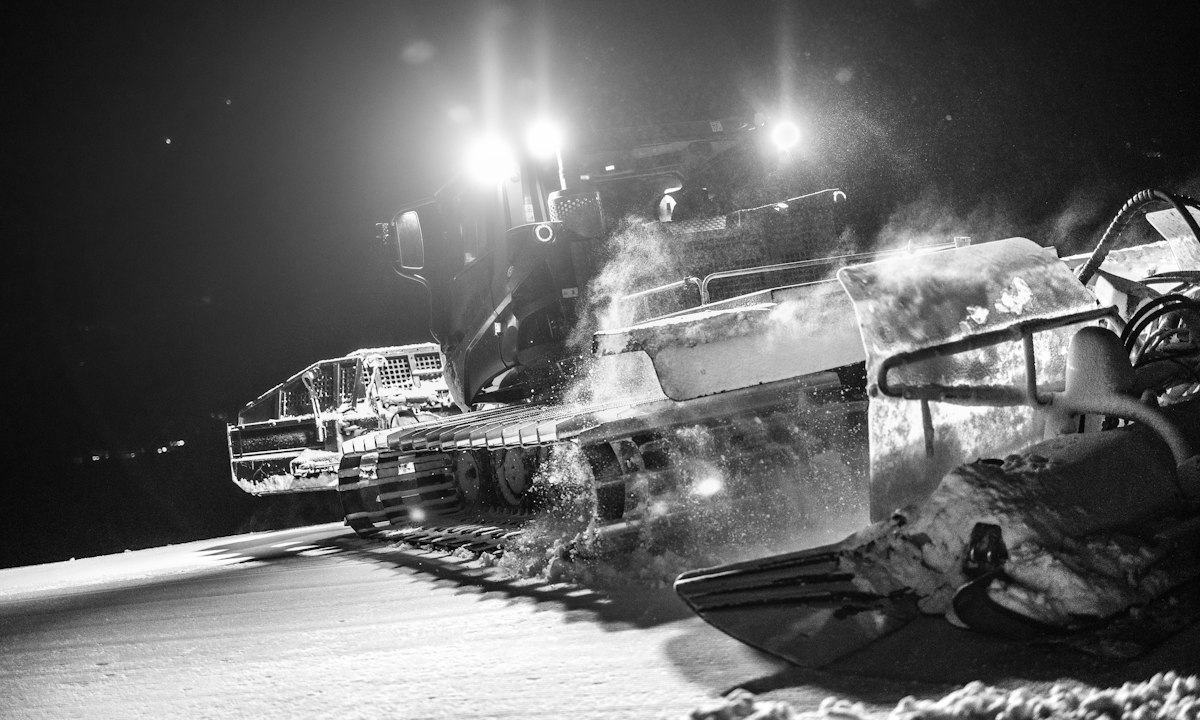
At Cerro Catedral, the work that makes your ski day possible starts around 9pm, hours after the last lift closes, and runs until just before dawn. A crew of roughly eight to twelve snowcat operators works through the night across the resort's 1,200 hectares and 120-plus runs, packing and reshaping snow so the piste is firm, even, and ready by the time the first chairlift turns. It is one of the least-seen jobs in Patagonian skiing, and one of the most essential.
What time does the grooming crew start work at Cerro Catedral?
The night shift typically begins around 9pm, once ski patrol has confirmed the mountain is clear of guests, and runs until 5 or 6am. Operators work in staggered shifts so machines are moving nearly continuously through the night. On big snow nights, the crew starts earlier and finishes closer to lift opening at 9am, leaving almost no gap between the last pass of the blade and the first skier's turns.
Which machines do the crews use to groom 1,200 hectares of terrain?
The crew runs diesel-powered snowcats, the same type of heavy grooming machine used at major resorts across the Andes, the Alps, and the Rockies. Each machine carries a front blade for pushing and shaping snow and a rear tiller that corduroys the surface into the ridged pattern skiers recognize. A single cat can groom roughly 15-25 hectares in an eight-hour shift, which is why a full night at Catedral requires multiple machines working different sectors simultaneously.
Why do some runs need winch-assisted grooming?
Cerro Catedral's steepest pistes, some pushing past 45 percent grade, are too steep for a standard snowcat to climb safely while grooming. On these runs, operators use winch cats: machines anchored by a steel cable to a fixed point at the top of the slope, which lowers the cat down the fall line under controlled tension. This is slower and more technical than flat grooming and is usually reserved for a handful of expert runs each night.
How does Patagonian wind affect the overnight grooming schedule?
Wind is the single biggest disruptor of the nightly grooming plan. Sustained wind above roughly 60 km/h can redeposit freshly groomed snow within hours, so crews often wait until wind drops late at night before grooming exposed upper-mountain sectors, and prioritize sheltered lower runs earlier in the shift. For more on how wind shapes a Patagonian ski day, see our guide to Patagonian wind and skiing.
What happens if a storm dumps snow right before opening?
When a storm delivers significant new snow overnight, the grooming plan changes completely: crews shift from cosmetic corduroy work to snow management, pushing accumulated powder off access roads and packing a base on key connector runs so patrol can complete avalanche control safely. On these mornings the mountain may open late, or with only a portion of terrain, while patrol and grooming coordinate run by run. Guests planning around forecast snow should check our guide on reading the Patagonia snow forecast.
Do groomers decide which runs open each morning?
Not alone -- opening a run is a joint call between the grooming crew, ski patrol, and mountain operations. Patrol has final authority on avalanche-controlled terrain, but groomers report overnight conditions -- ice, wind slab, exposed rock -- that directly inform which runs patrol clears first. On a normal night, this coordination happens by radio every hour or two; after a big storm, it happens continuously until the last run is confirmed safe.
What is it like to work the night shift on a Patagonian mountain?
It is cold, solitary, and, on a clear night, one of the best views in the Andes. Cabin temperatures in an unheated stretch of the shift can drop well below freezing, and operators spend hours alone with only a headlamp beam and the machine's own lights cutting through the dark. On calm, cloudless nights, the payoff is a sky thick with stars over the Nahuel Huapi basin -- the same dark skies that draw visitors to stargazing trips in Patagonia -- with nothing but the hum of the diesel engine for company.
Frequently Asked Questions
Can guests watch the grooming crew at work?
Not directly -- the mountain is closed to guests during grooming hours for safety, since snowcats operate on steep terrain in the dark. Some lodges near the base offer views of cat lights moving on the upper mountain in the evening.
Does every run at Cerro Catedral get groomed every night?
No. Crews rotate through a priority list based on traffic, terrain type, and snow conditions, so ungroomed or moguled sections are always part of the mix -- something off-piste and mogul skiers often look for deliberately.
How many snowcats does a resort the size of Cerro Catedral typically run?
Resorts with terrain in the 1,000-1,500 hectare range typically operate a fleet in the range of 6-10 grooming machines to cover the mountain in a single overnight shift.
Is night grooming affected by low-snow years?
Yes -- in thin-cover seasons, crews groom more conservatively to avoid scraping down to rock or dirt, which can mean bumpier surface conditions on some runs. Our post on what a bad snow year looks like in Patagonia covers how the whole operation adapts.
*This story was put together with input from Ski Patagonia Co. guides who have spent full seasons working alongside Cerro Catedral's mountain operations team.*
The corduroy under your skis on a Catedral morning is the result of an entire overnight operation most guests never see. If you want to build a trip around first tracks and the best-groomed hours of the day, plan your trip with our team.