Stargazing on a Patagonia Ski Trip: How to See the Southern Sky on Off-Nights
Bariloche has one of the lowest light-pollution corridors on the continent and the Southern Cross overhead. Here is how to plan a stargazing add-on into your ski trip.
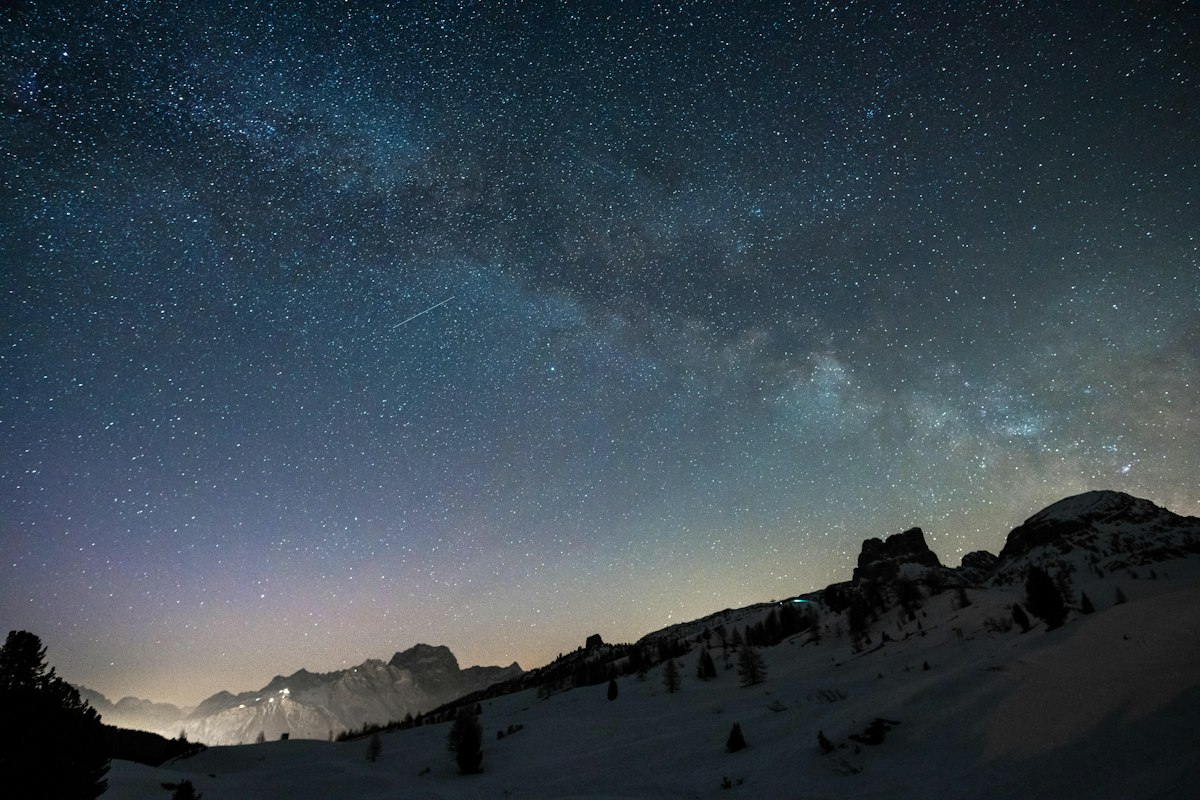
Most people come to Patagonia for the mountains and forget to look up. That is a mistake. Bariloche sits at 41 degrees south latitude, in one of the lowest light-pollution corridors on the continent, and during ski season the air is dry, cold, and unusually clear. On a moonless winter night, the sky here is not a backdrop -- it is the experience. Here is how to plan a stargazing add-on into your ski trip without losing a ski day.
Why Patagonia winter skies are exceptional
Three things have to align for a great dark-sky experience: low light pollution, dry air, and altitude. Bariloche has all three in winter. The town itself is small enough that walking 15 minutes off the lakefront drops you into Bortle 3 darkness -- an objective scale astronomers use, where 1 is a remote desert and 9 is downtown Manhattan. Most North American ski towns sit at Bortle 4 or 5. The drier air at altitude reduces atmospheric scattering, so individual stars look sharper. And the cold winter air holds less moisture than the summer alternative, which means the Milky Way arc is visible to the naked eye on the right night.
The other reason Patagonia is special: the Southern Cross. This four-star constellation does not rise in the Northern Hemisphere. If you have lived your whole life north of the equator, your first clear view of the Cross is a small, real moment.
The Southern Cross and what to look for first
The Southern Cross (Crux) is small but unmistakable once you know where to look. From Bariloche in July or August, it sits high in the southeast sky after dark and rotates slowly toward south by midnight. To find it: identify the brightest star low in the southeast and trace upward through three more bright stars in a kite shape. The two pointer stars to the left are Alpha and Beta Centauri -- which together with the Cross form the navigational reference Southern Hemisphere sailors used for centuries.
The other big winter target: the Milky Way core, which arcs across the Patagonian sky in a way it cannot at northern latitudes. From mid-July through August, the galactic center sits high overhead from about 9 p.m. local time. You can see it without optics. With even a basic pair of binoculars, the Lagoon Nebula, Trifid Nebula, and the dense star fields toward Sagittarius become visible.
If you have only one stargazing night, plan it within five days of new moon and aim to be outside between 9 p.m. and midnight. That window is the sweet spot.
Best stargazing spots near Bariloche
You do not need to drive far. A 20-to-30-minute drive west of central Bariloche puts you in serious darkness:
The Llao Llao peninsula, especially the small road south of the famous hotel, has lake-water reflections that double the visible sky. On clear nights, the water surface mirrors the brighter stars. Bring a thermos.
Cerro Otto access road, a winding mountain road climbing the small mountain just south of town, has multiple pull-outs at higher altitude. Avoid the lights at the summit complex and stop at the second or third pull-out. You gain a few hundred meters of elevation, which gets you above any lingering valley humidity.
The Colonia Suiza area, on the western side of the lake about 30 minutes from town, is the quietest stretch of road you can reach without a 4x4. We send small groups here for new-moon nights.
For the more ambitious, the Refugio Frey trailhead parking lot is a high-altitude option, but only if the road is free of ice. Confirm with your guide before driving up.
Best months and moon phase planning
The dark-sky season in Patagonia matches the ski season almost perfectly. June is good but skies can still be soft from autumn humidity. July and August are the peak months, with the longest, darkest nights of the year and the lowest atmospheric moisture. September begins to lengthen the days but stays excellent until the first of the spring storms.
Plan around the new moon. A bright moon -- gibbous to full -- will erase about 70 percent of the visible deep-sky targets. New-moon weeks in your travel window are the nights to schedule a stargazing session. If your trip falls during a full moon, do not worry: lunar landscape photography is its own reward, and the moonlit Andes are beautiful in their own way. We have a piece on night skiing in Argentina for groups who want to ski under a bright moon.
Practical: what to bring, what to wear, when to go
Stargazing in Patagonia winter is a cold-weather activity. Plan as if you were riding a midnight chairlift:
- Insulated boots, two pairs of socks, parka, gloves, and a beanie. The temperature drops fast after sunset.
- A red-light headlamp or a regular headlamp with a red-light mode. White light kills your night vision for 20 minutes per hit.
- Hot drinks in a thermos. We bring mate or hot chocolate.
- A binocular pair if you want to push past naked-eye viewing -- 8x42 or 10x50 are ideal.
- A blanket or camp chair if you plan to stay out for an hour or more.
Most people last 60 to 90 minutes outside in a Patagonian winter night, even fully dressed. Plan your session accordingly. Do not try to drive home at 2 a.m. tired and cold; bracket your night and head back to the lodge while you still feel sharp.
Combining stargazing with a private guide
This is where it gets fun. A ski guide in Bariloche who has been at it for a decade has watched these skies thousands of times. They know which constellations are up when, where the dark spots are along the lakefront, and which roads are passable in deep winter. We add stargazing as an off-night activity for clients who want it -- typically as a 90-minute pop after dinner, with hot chocolate and a thermos kit.
If you are skiing several days back-to-back, a stargazing night is a low-impact add. You walk back into the lodge tired but not muscle-fatigued, sleep deeply, and ski well the next morning. We have written about yoga and recovery during a ski trip; cold-air stargazing fits the same recovery-day logic.
The right way to think about a Patagonia stargazing add-on
Some experiences are worth planning around. The Southern Cross overhead, the Milky Way on a moonless August night, the silence of a frozen Patagonian lake at midnight -- these are not consolation prizes for a wind-closed lift day. They are the reason a Patagonia ski trip feels different from a Vail or a Verbier week.
If you want a custom trip that builds in a stargazing night around the new moon and the right weather window, our custom experiences team can structure it. Tell us your travel dates and your group when you start with Plan My Trip, and we will plan the right night for you to look up.