Skiing With a Partner of a Different Level: How Mixed-Ability Couples and Friends Make It Work at Cerro Catedral
Can a beginner and an expert ski together? Yes, with a plan. Our guides explain how mixed-ability couples and friends can split the day and enjoy Cerro Catedral.
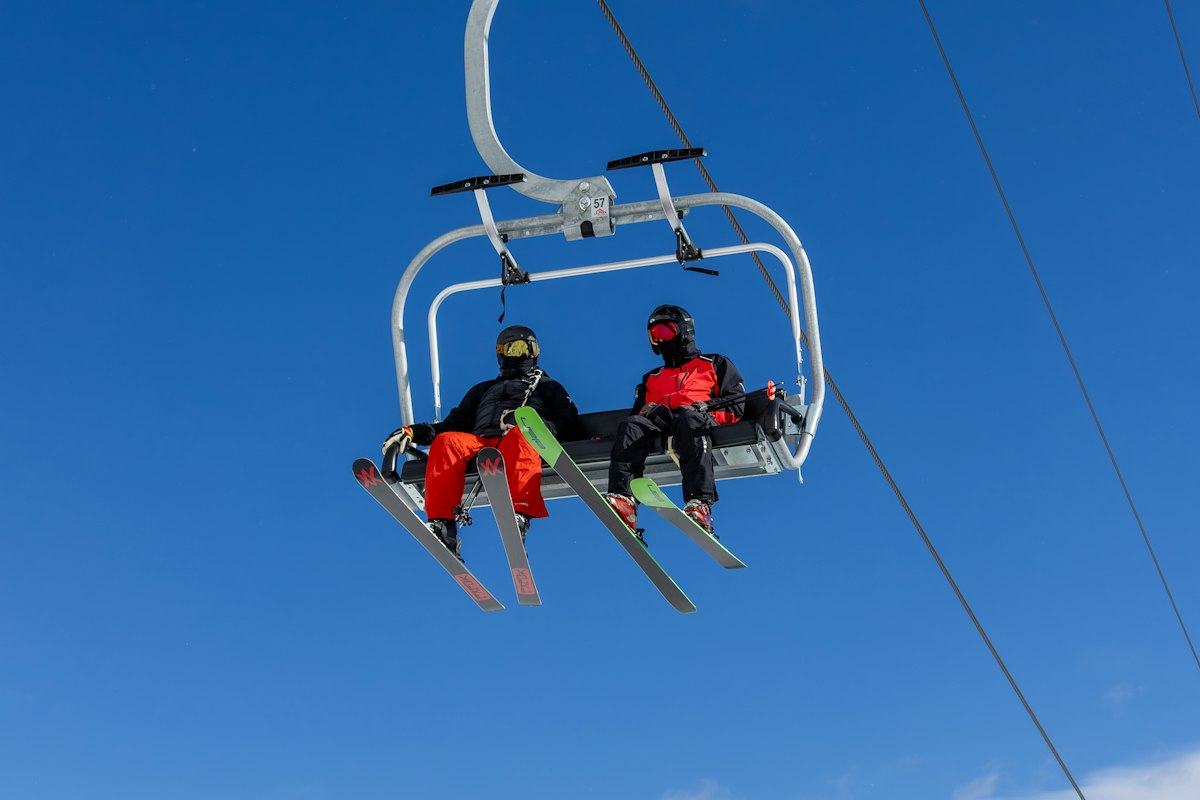
Skiing with a partner or friends of a different level works well at Cerro Catedral if you split the morning, share the lunch and reunite on the mountain at agreed meeting points. The mountain has wide beginner terrain and plenty of blue runs that bridge the gap, so a stronger skier and a newer skier can ski together for a good part of every day. The key is a plan you both agree on before the first lift.
Quick Answer: Making mixed-ability skiing work
- Split the morning: the stronger skier takes a guided session, the newer skier takes a lesson
- Meet for lunch: agree a refugio and a time, and keep to it
- Ski the blues together: the middle ground where both of you can enjoy the run
- Set a signal: a phone check-in or a fixed meeting point at each lift station
- Plan for fatigue: the newer skier will be tired by 2 pm, so end together
Can a beginner and an expert really ski together at Catedral?
Yes, for about half of each day. Catedral has roughly 120 marked runs over about 1,200 hectares, and a large share of them are blue, which sits between the beginner and expert extremes. A confident intermediate and a nervous beginner can share a lift, an easy blue run and a lunch table without either being bored or scared.
The runs where the two levels overlap are the wide, groomed blues and the gentler sections of the main sectors. For the beginner side of the picture, see our best beginner runs at Cerro Catedral.
The honest answer is that you cannot ski the whole day together. Trying to do so is the single most common reason a mixed-level couple ends the trip with a quarrel.
How should you split the day?
Split the morning, then join for lunch and the early afternoon. The stronger skier spends the first two or three hours on harder terrain or with a guide, the newer skier takes a ski lesson, and you meet at a refugio at around 12:30 or 1 pm.
A simple structure:
- 9:00-12:00: separate sessions. One of you in a lesson, one on harder runs.
- 12:30-14:00: lunch together at an agreed refugio.
- 14:00-15:30: ski the blues together, at the slower skier's pace.
- 15:30: stop. The newer skier is tired, and tired skiers get hurt.
Our guide to lunch at the refugios on Catedral can help you choose the meeting place.
Is a ski lesson better than being taught by your partner?
A lesson is almost always better, and it is better for the relationship too. A professional instructor is calm, has no emotional stake in your progress and knows how to teach a progression. A partner, however kind, tends to say "just lean forward" and then ski away.
Group lessons at the Catedral ski school typically run two to three hours, and private lessons cost more but move faster. If you want to understand the difference, our post on ski lessons versus a private guide at Cerro Catedral explains the trade-offs, and our account of what a ski school lesson is like shows what to expect.
What does the stronger skier do while the other is learning?
The stronger skier uses the time well, rather than hovering at the edge of the beginner area. Good options include a guided morning on harder terrain, a few fast laps on the groomers, or a session of technique work.
For stronger skiers who want a real challenge, our guides can arrange a half-day on more demanding terrain. Our off-piste experiences are one route. If you would rather stay inside the ropes, the expert terrain at Cerro Catedral has plenty to occupy you for a morning.
Do not skip this part. A stronger skier who spends the whole trip on the nursery slope will resent it, and the newer skier will feel it.
How do you stay in touch on a big mountain?
Agree two things before you leave the base: a fixed meeting point and a time. Catedral is large, and phone coverage on the upper mountain is patchy, so do not rely on messages alone. A good rule is to meet at the same lift station every time, and to wait ten minutes before you worry.
Also agree what happens if one of you is hurt or exhausted. The ski patrol can reach you on the hill, and our guide on what to do if you get injured skiing in Argentina lays out the steps.
What if the whole group is mixed, not just a couple?
For groups, split by level and rejoin for meals. Four friends of three different abilities should not try to ski as one pack. A group of this kind is where hiring a guide for the stronger half, and a separate instructor for the rest, pays for itself. Our group experiences are built around exactly this pattern, and our report on eight friends skiing a week at Cerro Catedral shows how it plays out.
Frequently Asked Questions
How long does it take a beginner to ski blue runs? Most adults who take lessons on three or four days can ski easy blue runs by the end of a week, though this varies. See our guide to learning to ski as an adult in Argentina for realistic timelines.
Should a couple book the same lesson? Not usually. A beginner and an intermediate learn at different speeds, so separate lessons or groups tend to work better, followed by a shared afternoon.
What if the newer skier does not want to ski every day? That is fine. A rest day mid-trip helps both of you, and Bariloche has plenty to do off the mountain. Our note on the recovery day mid-trip has ideas.
This guide was written by the Ski Patagonia Co. team, based on many seasons of guiding mixed-ability couples and groups at Cerro Catedral.
Ready to turn these ideas into a real week on the mountain? Plan your trip with us and our team will build the itinerary around you.
Hero photo by Ryan Fleischer on Unsplash