Backcountry Skiing in Patagonia: Routes, Risks, and Rewards
What backcountry skiing in Patagonia actually looks like — the classic routes, the real risks, and how to do it with a local guide.
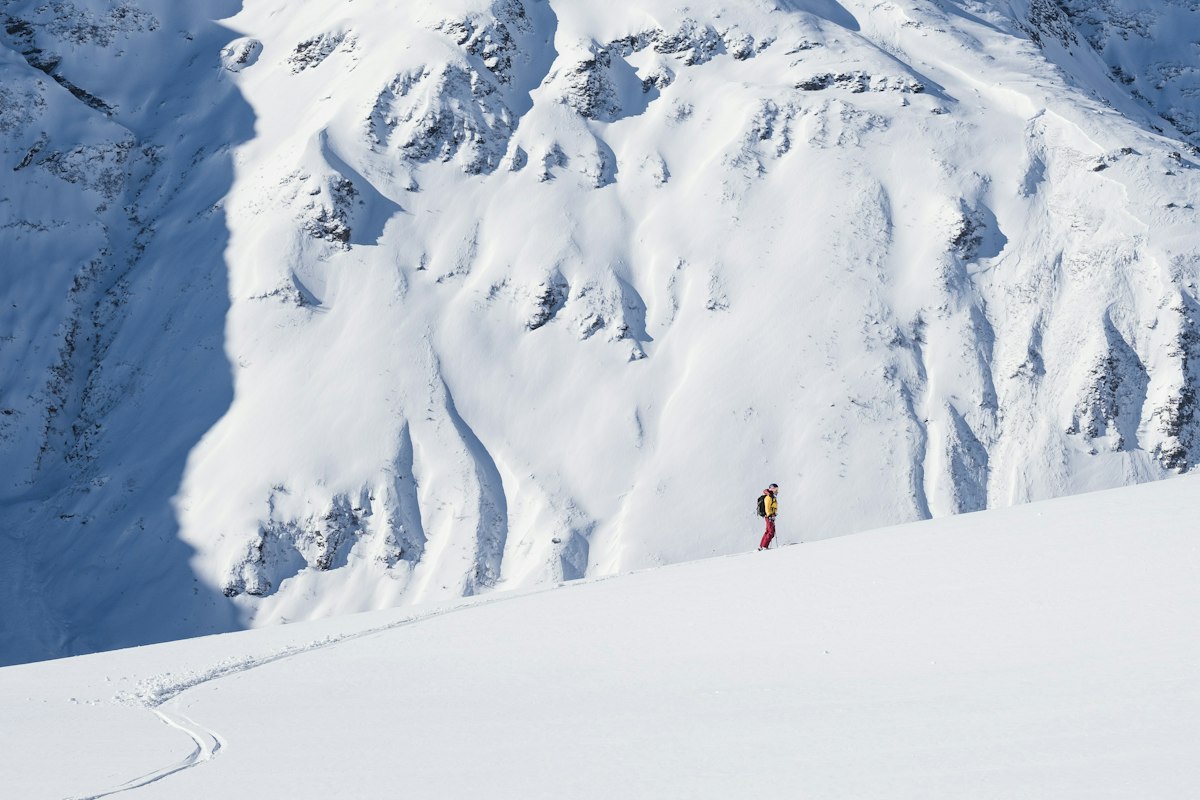
Backcountry skiing in Patagonia delivers something you can't buy on a lift ticket: empty basins, volcano-view descents, and ski lines that haven't been tracked out by 9:30 AM. It's also the kind of skiing that punishes people who treat it casually. This guide covers where to go, what the risks look like, and how our team approaches backcountry days for visiting skiers.
We've guided backcountry terrain around Bariloche, San Martín de los Andes, and Las Leñas for more than a decade. What follows is what we tell every guest before they clip into touring bindings for the first time in the Andes.
What counts as backcountry skiing in Patagonia?
Backcountry skiing means skiing terrain outside patrolled, avalanche-controlled resort boundaries — earned by skinning uphill, accessed by sidecountry gates, or reached via helicopter or snowcat. In Patagonia, the term covers everything from short tours off the back of Cerro Catedral to multi-day traverses through the Nahuel Huapi wilderness.
The defining characteristic is that no one else is managing the risk for you. No patrol. No avalanche bombing. No groomed reference line. You and your guide are reading the snowpack and making every call.
The classic backcountry zones
Refugio Frey area (Bariloche): The most accessible serious backcountry near a major town. A 3-4 hour approach from Villa Catedral lands you at Refugio Frey, a climbers' hut surrounded by couloirs and technical granite spires. Intermediate tourers can lap moderate north-facing bowls; experts ski 45° couloirs like López Sur.
Cerro López: Across the valley from Catedral. Less crowded, with a long ridgeline that feeds into multiple aspects. A good intro-to-Patagonia backcountry day.
Volcán Lanín zone (near San Martín de los Andes): Big volcano skiing — long climbs, long descents, low traffic. You'll see our team guiding here in late August and September when the weather stabilizes.
Las Leñas sidecountry: If you ride the Marte lift at Las Leñas, the entire ridge behind it is legendary backcountry terrain. This is steep, committing skiing with real exposure. Read our Las Leñas overview before you go.
Cerro Castor sidecountry (Ushuaia): Short tours off the Castor resort boundary give you views over the Beagle Channel. The snowpack behaves differently this far south — more maritime, more wind-affected.
How dangerous is backcountry skiing in the Andes?
Dangerous enough that we don't take guests into committing terrain without avalanche education, functioning beacon/shovel/probe, and a guide who has skied the specific route in current conditions. The Patagonian snowpack is maritime on the coast, continental in the high Andes, and the transition zones between the two produce unusual layering. Wind slab is the single most common trigger here.
It is not as dangerous as the Tetons or the Chugach in terms of sustained avalanche terrain, but it is significantly more exposed than most European resort backcountry. Weather is the other killer: whiteouts come in fast, and the distances back to shelter are longer than they look on a map.
What skill level do you need?
At minimum, you need strong off-piste resort skiing — able to ski variable snow, breakable crust, and steep bumps in control. If you can't comfortably ski the ungroomed terrain we describe in our off-piste skiing in Patagonia guide, backcountry is not the right move yet.
For skin-up tours, you also need baseline aerobic fitness. A typical Frey tour is 700-1,000 vertical meters of skinning, which takes 2-3 hours for a fit skier. For bigger volcano days, plan for 1,500m+ climbs.
No avalanche certification is legally required in Argentina to ski backcountry, but we strongly recommend an AIARE Level 1 or equivalent before attempting anything unguided.
Gear you need for a backcountry day
- Alpine touring setup (skis with tech bindings, boots with walk mode, skins)
- Avalanche transceiver (457 kHz), shovel, probe
- 30-40L backpack with ski carry straps
- Helmet (always, even on mellow tours)
- Extra layers, food for the day, 2L of water, headlamp
- Optional but recommended: airbag pack, ski crampons for icy mornings
Rental AT setups are available in Bariloche but inventory is thin — reserve ahead. Our team brings full guest gear kits on guided days. For a broader packing checklist, see our Patagonia ski packing list.
When is the best time for backcountry?
Late August through mid-October is our preferred window. Snowpack has had time to settle, storm cycles are shorter, and daylight is long enough for big objectives. July can deliver incredible powder but storm frequency makes multi-day plans fragile. We break the full season down in our week-by-week season guide.
Should you hire a guide?
Honest answer: yes, at least for your first few days in the zone. The snowpack, the weather patterns, and the access logistics are different enough from North American or European backcountry that a local guide pays for themselves on day one. Our off-piste and backcountry experience pairs visiting skiers with certified UIAGM or AAGM guides who know the specific zones in current conditions.
Beyond safety, a guide takes care of the stuff that burns daylight: shuttle logistics, refugio bookings, permits for border-adjacent terrain, and knowing which south-facing aspect actually held snow through that last warm-up.
What a typical guided backcountry day looks like
5:30 AM wake-up. Gear check at the lodge. 6:45 shuttle to the trailhead. Skin up for 2-3 hours as the sun comes up over the Andes. One or two descents depending on conditions and fitness. Skin out or exit to a pickup. Back at the lodge by 3-4 PM for a long lunch and a nap before dinner.
On multi-day refugio traverses, the rhythm stretches out: 4-6 days of hut-to-hut skiing with a guide handling navigation, weather calls, and meals. These are life-list trips.
Ready to plan a backcountry day?
We build backcountry days into custom itineraries for intermediate-advanced skiers as day trips from Bariloche, or as the backbone of a full custom multi-resort tour. For groups, we can run private small-group backcountry trips with two guides for higher skier-to-guide ratios. Start planning your Patagonia ski trip and tell us what you're dreaming about — we'll build it around conditions, experience, and the terrain you actually want to ski.