Alfajores and Dulce de Leche: The Argentine Snacks That Fuel a Patagonia Ski Day
What is an alfajor, and which should skiers buy? A guide to alfajores and dulce de leche in Bariloche, with prices, types and where to buy.
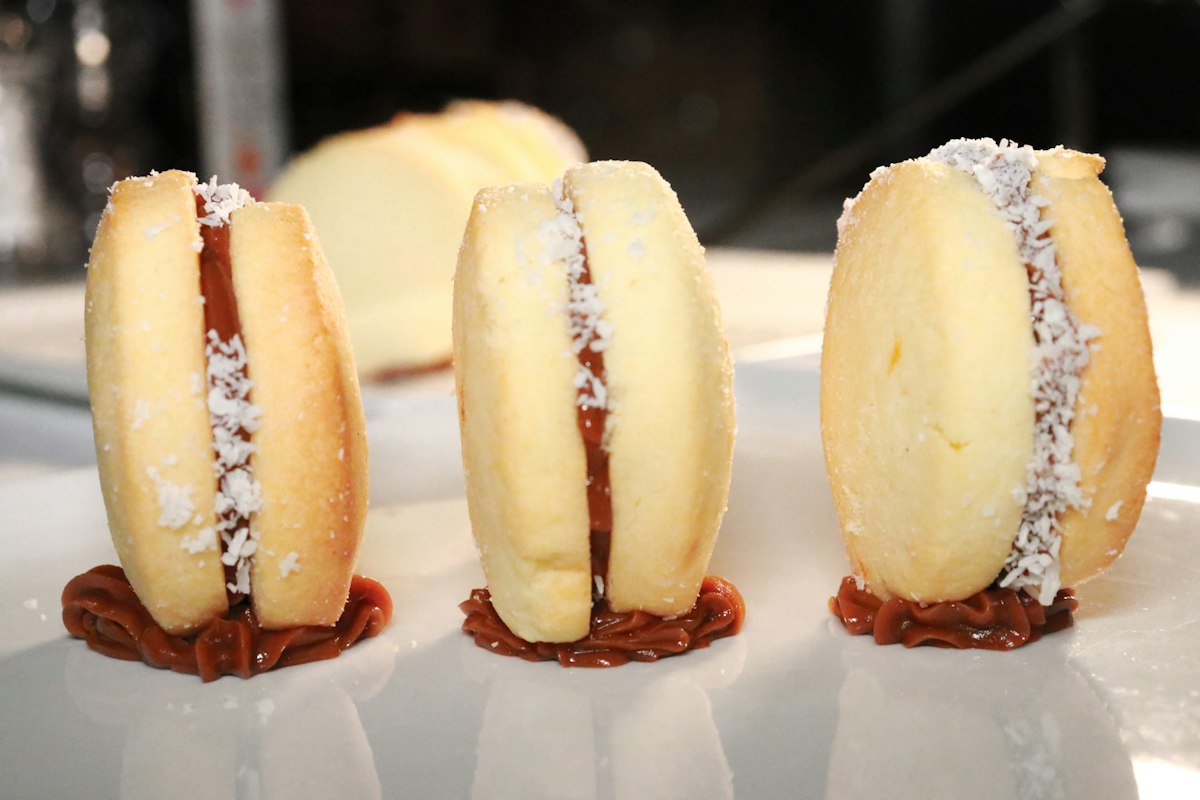
An alfajor is a soft sandwich cookie filled with dulce de leche, and in Argentina it is the default ski-day snack: cheap, calorie-dense and sold at every kiosk. Expect to pay about $1-$3 USD each, and for the best ones in Patagonia look for the regional and chocolate-covered versions in Bariloche and the lake district. Dulce de leche, the caramelised milk spread inside, also turns up on pancakes, in coffee and on the breakfast table.
Quick Answer: Alfajores and dulce de leche for skiers
- What it is: two soft cookies sandwiching dulce de leche, often coated in chocolate or coconut
- Price: about $1-$3 USD for a supermarket brand, $3-$6 USD for a boutique one
- Best place to buy in Patagonia: Bariloche's chocolate and regional-food shops
- Best pocket snack: a chocolate-coated triple, which survives a jacket pocket
- Gift-ready: shops sell boxes of 6 or 12 that travel well
What is an alfajor and why do Argentines love it?
An alfajor is a sandwich of two tender cookies joined by dulce de leche, and Argentines eat tens of millions of them every year. The cookie is usually cornstarch-based and crumbly, the filling is thick milk caramel, and the outside may be bare, dusted with coconut or coated in chocolate. It is a snack, a gift and a small point of national pride.
You will see alfajores at every petrol station, supermarket and mountain kiosk. For a skier, the appeal is practical: sugar and fat in a wrapper, no cutlery, no queue. We keep one in a jacket pocket on every guided day.
What is dulce de leche?
Dulce de leche is milk slowly cooked with sugar until it becomes thick, brown and spreadable. It tastes like caramel with a milky depth and is far more common in Argentina than jam or peanut butter. It is sold in jars in every supermarket, usually for about $2-$5 USD.
You will meet it in several forms:
- As the filling in alfajores.
- Spread on toast and medialunas at breakfast, which we cover in our guide to mate and medialunas on a ski morning.
- Swirled into ice cream, a flavour called dulce de leche granizado when chocolate flakes are added.
- Poured over pancakes, called panqueques con dulce de leche.
What kinds of alfajor should you try in Patagonia?
Try three styles: the classic chocolate-coated triple, the cornstarch alfajor de maicena with coconut edges, and a regional Patagonian version with local fruit or nuts. Each tastes quite different, so a mixed box is the best way to compare.
- Chocolate triple: three cookie layers, two fillings, a thick chocolate shell. The most pocket-proof.
- Maicena with coconut: pale, delicate and very crumbly. Best eaten with coffee, not on a lift.
- Regional specialty: in Bariloche you will find alfajores filled with rosehip, raspberry or hazelnut, often from small chocolatiers.
- Supermarket brands: perfectly good for the mountain, and the cheapest by far.
Bariloche's chocolate culture means the town's alfajores are better than average. Our piece on why Bariloche takes chocolate seriously explains the town's history with cocoa.
Where should skiers buy alfajores in Bariloche?
Buy them at the specialist chocolate shops along Mitre street in the centre and at the bakery counters, then restock cheaply at supermarkets. Mitre has a dense run of chocolatiers, many of which offer a free sample on request.
A simple approach for a week:
- Buy a 6-pack of a boutique brand as a gift or a treat.
- Buy a bag of 10-12 supermarket alfajores for daily mountain snacks, about $8-$14 USD.
- Eat one with a mid-morning coffee on the mountain, which our guide to lunch at the refugios of Cerro Catedral covers in more detail.
How do alfajores compare with the snacks skiers bring from home?
Alfajores are cheaper and more local than most imported energy bars, though slightly less balanced nutritionally. A typical alfajor holds roughly 200-300 calories, depending on size and coating. A comparison:
| Alfajor | Energy bar | Chocolate bar | |
|---|---|---|---|
| Typical price | $1-$3 USD | $2-$4 USD | $1.50-$3 USD |
| Calories | ~200-300 | ~200-250 | ~220-280 |
| Pocket-proof | Good if chocolate-coated | Very good | Poor in warm weather |
| Local flavour | High | None | Low |
Can you bring alfajores home?
Yes, sealed commercial alfajores are generally fine to carry home, but check your own country's customs rules on dairy-based products. Boxed, factory-sealed versions travel best. We suggest buying gifts on your last full day in town so they stay fresh.
Frequently Asked Questions
Are alfajores gluten-free? Most are not, because the cookies are made with wheat or cornstarch blends. A few shops sell gluten-free versions, so ask before you buy.
How much does an alfajor cost in Argentina? A supermarket alfajor costs about $1-$3 USD, and a boutique one from a chocolatier is usually $3-$6 USD.
What is the best alfajor for a ski day? A chocolate-coated triple is the sturdiest option. It survives a pocket and does not crumble like the maicena type.
Do ski resorts sell alfajores? Yes, base lodges and mountain refugios sell them alongside coffee and hot chocolate, usually at a small mountain markup.
This guide was written by the Ski Patagonia Co. team, based on years of eating our way through the Bariloche pastry counters between guiding days at Cerro Catedral.
If you would like a ski week that includes chocolate tastings, a proper asado and the best snacks in town, plan your trip with us or see our group experiences.
Hero photo by Stefano Intintoli on Unsplash