Wildlife on a Ski Day in Patagonia: Condors, Foxes and What Lives on the Mountain
Cerro Catedral is home to more than skiers. Here is what you are likely to see on the mountain, and where to look for it.
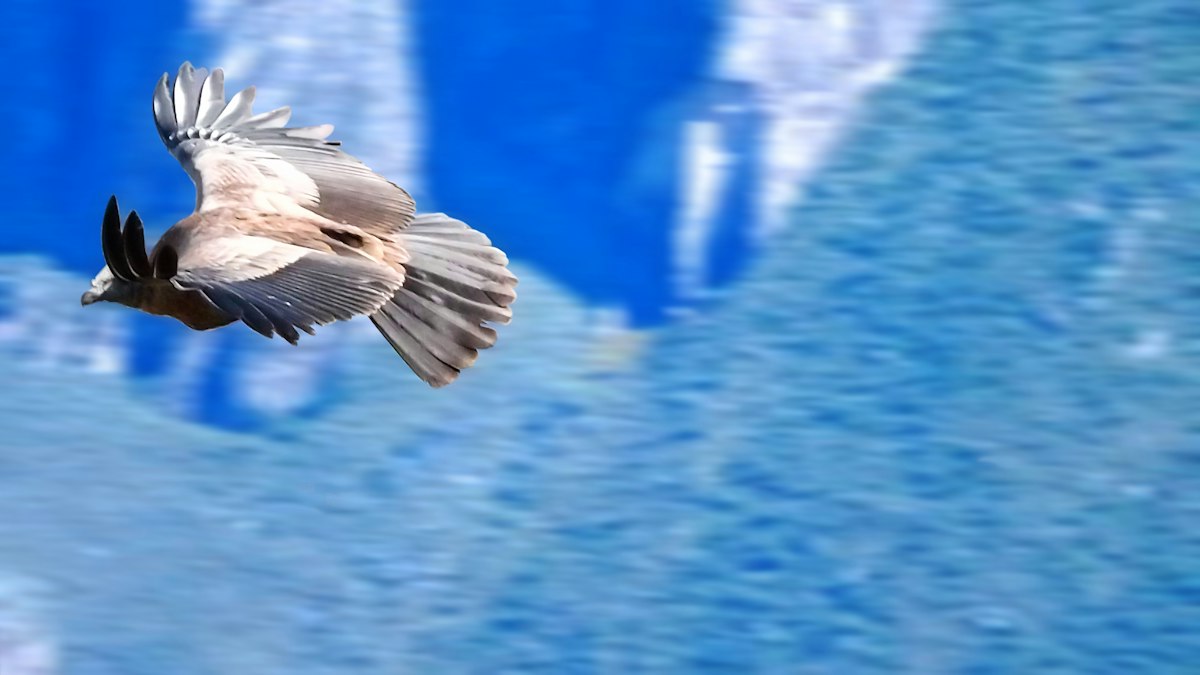
Most people come to Cerro Catedral for the skiing. What they do not always expect is the wildlife. The mountain and its surrounding forest are part of Nahuel Huapi National Park, one of the oldest protected areas in South America, and the animal life here is genuine -- not managed or fenced, just present, going about its business alongside the lifts and pistes.
The encounters are not guaranteed. Some days you see nothing beyond the standard birds. Other days you stop mid-run because there is a condor riding a thermal fifty metres overhead, and you stand there watching it until someone else in your group reminds you that the lift closes at four. This is that kind of mountain.
The Andean condor
The condor is the one most people hope to see, and Catedral delivers reasonably often. The birds ride thermals generated by the rock faces and ridgelines, and on still mornings in July and August they are frequently visible from the upper lifts. Look for the distinctive white collar and the span -- a large adult Andean condor has a wingspan of around three metres, which makes it unmistakable once you know what you are looking at.
The best viewpoint for condors is the area around Refugio Lynch, near the top of the Catedral and Condor chairlifts. Sit on the terrace with a coffee between ten and noon on a clear day and the odds are reasonable. The birds are not feeding -- they are using the mountain's thermals as an efficient way to gain altitude before soaring out over the lake and the plains beyond. You are seeing the mountain from their perspective for a few minutes.
Patagonian fox
The grey fox, known locally as the *zorro gris*, is common around the lower mountain and the treeline. They are small -- roughly the size of a domestic cat -- and not particularly shy. Skiers report seeing them near the base of the Viejo Expreso and along the paths between the refugios, where they have learned that humans sometimes drop food.
They are genuinely wild animals and should not be fed, but they are accustomed to human presence and will hold their ground and watch you with considerable calm. If you see one at close range, the best approach is to stop moving. They will usually sit for thirty seconds to a minute before deciding you are not interesting and trotting off into the trees.
Fox sightings tend to happen in the early morning before the mountain gets busy, and again in the late afternoon as the crowds thin. If you take the first lift up, the chances improve.
Birds of the park
Below the condor, the bird life is varied and worth paying attention to. The *cauquen* -- a goose-like bird that grazes in the meadows near the lake -- is often visible from the gondola on the way up. The Magellanic woodpecker, one of the largest woodpeckers in the world, lives in the old-growth coihue forest on the lower slopes. You hear it before you see it: a slow, heavy drumming that does not sound like what you expect from a woodpecker.
The *bandurria* -- a buff-necked ibis -- moves in small groups across the open areas below the treeline, probing the ground with its curved bill. It is not rare but it is distinctive, and first-time visitors often ask what it is.
Smaller species -- finches, hummingbirds in the warmer months, several types of raptor -- fill in the rest. Birders who want a specific list before they arrive can download the park's checklist from the Nahuel Huapi National Park administration; as of writing it runs to over 300 species for the wider park.
What else lives here
The broader ecosystem supports puma, huemul (the South Andean deer, and an endangered one), and wild boar -- though these are not mountain animals in the way the condor and fox are. Puma territory extends across the park's backcountry. If you ski off-piste in the more remote areas of Catedral, your guides will mention puma as part of the briefing. The probability of a sighting is very low; the awareness is still worth having.
The *pudu*, the world's smallest deer, lives in the dense lower forest. It rarely comes into the open and most people never see one, but it is there.
How to improve your chances
A few practical notes. Early and late in the day are better than midday. The edges of runs are better than the centre. Moving slowly and stopping often beats skiing fast. If your group has a guide, ask them -- the local guides know the patterns and can point you toward areas where sightings happen more regularly.
Our off-piste routes through the park's quieter zones put you in terrain where the wildlife is less disturbed. If this kind of encounter matters to you, mention it when you plan your trip with us and we will build some time into the programme for it.
The skiing at Catedral is the reason to come. The wildlife is the part that people tend to mention when they get home. If you are going to be on the mountain for a week, take twenty minutes one morning to sit somewhere above the treeline and watch what moves. It is almost always worth it.
For more on what to expect from a full ski week in Patagonia, the week-by-week breakdown of the season covers conditions and timing in detail. And if the off-piste terrain appeals, our off-piste experiences take you into the parts of the park where the wildlife is least disturbed.