Three Runs Our Guides Never Tell Guests About (Until the Third Day)
Every Ski Patagonia Co. guide at Cerro Catedral keeps a short list of runs that don't appear on the trail map -- earned terrain shared only with guests who have proven they can handle it.
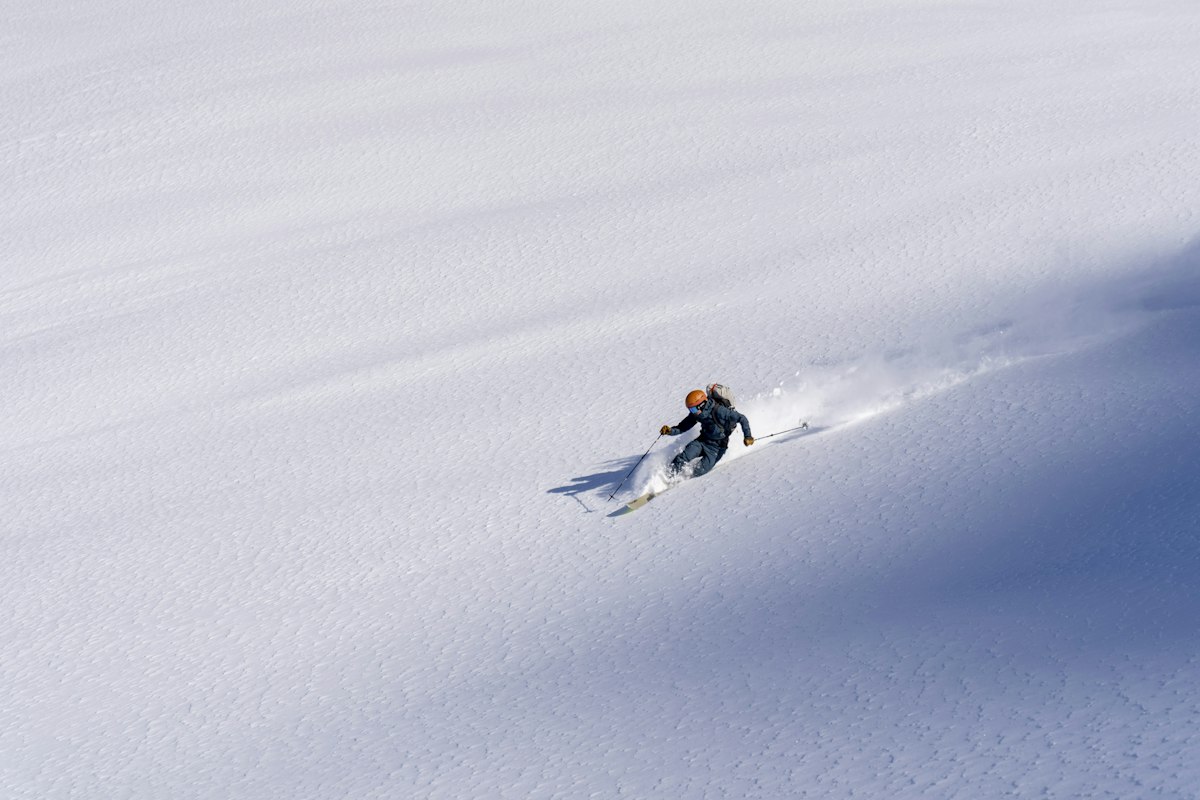
Every guide at Cerro Catedral has a short list of runs that do not appear on the trail map. Not because they are dangerous -- though some are -- but because they require a certain kind of guest: someone who follows instructions, does not panic on steeper ground, and trusts the guide to choose the right line at the right moment. This is about three of those runs and what it takes to get shown them.
Why do guides save certain runs for specific guests?
The mountain covers 1,200 hectares and has 120+ marked runs, but the most interesting terrain at Catedral exists in the spaces between the map. These are the entry points to the north-facing couloirs above the Catedral chairlift, the tree line shots off the Punta Princesa traverse, and the windswept ridgeline above the Colgante lift that most guests walk straight past because it looks like a maintenance road. Guides share these lines selectively for one simple reason: they are not appropriate for every skier. Showing a nervous intermediate into a 45-degree couloir helps nobody. But showing the right guest -- someone who has already handled the mountain's black runs cleanly and shown good awareness of where their partners are -- is one of the genuine pleasures of guiding.
The first run: the Punta Princesa north face exit
At the top of the Punta Princesa lift, most guests turn right toward the standard red descent back down to the Catedral chairlift. The run to the left looks like it leads nowhere -- a flat traverse along a windblown ridge, with nothing visible beyond it. Guides who have been working Catedral for more than two seasons know what is beyond it: a 300-metre pitch of consistent 35-38 degree slope with north-facing aspect that holds powder for up to three days after a storm, while the south-facing runs below are already churned. The entry requires committing to a short rock step -- about 60 centimetres -- and then staying left to avoid a narrow runnel that funnels into a cliff band. It is not something you explain on the lift; it is something you ski with a guide who goes first and calls the turn. On the right day, with the right snow and the right guest, it is the best 90 seconds on the mountain.
The second run: the Bambi off-piste left
The Bambi area is where the ski school operates and where most guests spend their first day. It looks like the beginner zone -- and the marked runs are. But just left of the Bambi lift, between two widely spaced rows of lenga beech trees, there is a consistent 200-metre tree run that fills with untracked powder after every storm. The trees are spaced generously enough for an intermediate-plus skier, and the pitch is honest without being alarming -- around 28 degrees. The reason it stays untracked: it is not visible from the lift, there is no signage pointing to it, and the entry looks from above like a dead end. Guides who know it bring guests here on Day 2 or 3 once they have seen how the guest handles variable snow. The reward is usually 4-8 untracked turns at a point in the ski day when the main runs already look like a mogul field.
The third run: the ridge above Colgante
The Colgante chairlift tops out at approximately 2,100 metres and most guests drop immediately onto the standard Colgante descent. Walk 150 metres east along the ridgeline -- it looks like you are heading toward the ski patrol hut -- and you reach a point where the ridge narrows and then opens onto a wide, convex roll dropping toward the Valle Catedral below. The aspect here is north-northwest, which means it holds cold snow in the morning before the sun reaches it, and the surface is usually untouched by 10am even on busy days because almost nobody walks the extra two minutes. The pitch starts at around 30 degrees and mellows to 22 as you run out toward the valley floor, where you rejoin a marked traverse back to the Catedral lift. It is a longer run than it looks -- closer to 400 metres of vertical -- and the views of the lake and the Chilean border range to the west stop most guests mid-run to take a photograph.
What does it take to get shown these lines?
There is no checklist, and no guest has ever been told directly that they are being evaluated. The honest answer is that a guide watches how you ski for the first two to three hours: whether you look uphill before dropping in, whether you stay in control on steep pitches or whether survival instinct kicks in and you sit back, and whether you respond to coaching or dig in when told to change something. Guests who trust the guide, stay close, and ask good questions about the mountain -- not just "where is the hardest run" but "why is that slope loading more than this one" -- are the guests who get shown the interesting terrain. The mountain reveals itself at that pace. If you are spending a week at Catedral, the off-piste experience is where this kind of guiding happens properly.
Frequently Asked Questions
Are the unguided off-piste areas at Cerro Catedral dangerous?
Some of them are. The marked runs at Catedral are patrolled and managed for avalanche risk during the season. The unguided terrain above and between those runs carries real hazard -- cliff bands, wind slabs, and terrain traps that are not obvious from above. Never drop into unpatrolled terrain at Catedral without a guide who has assessed conditions that day. The mountain patrol is excellent but they cannot mark every hazard on 1,200 hectares.
Can I hire a guide for just one day at Cerro Catedral to access advanced terrain?
Yes -- a single day of private guiding is one of the best investments you can make on a Catedral trip. Our guides charge per group (up to 4 skiers) for a full day, which includes access to the terrain described above on appropriate snow days. Contact us through the trip planning page with your dates and skiing level.
How does snow quality on the north-facing terrain compare to the main runs?
Significantly better in the days following a storm. North-facing slopes at Catedral hold cold, dry powder for 2-3 days after a snowfall because they receive limited direct sun in the July-August period. The main south-facing pistes can consolidate and crust within 24 hours of a storm. Guides track aspect carefully when planning the day's route, which is part of why guiding at Catedral is more nuanced than it looks.
*This piece was written by one of our senior guides at Ski Patagonia Co., who has spent 9 seasons at Cerro Catedral and would rather stay anonymous for reasons that should be obvious.*
If you want to ski the terrain that does not appear on the map, talk to us before your trip. We will match you with the right guide for your level.