The Hardest Line at Cerro Catedral: A Guide's Perspective
A senior Ski Patagonia Co. guide walks through the most demanding off-piste terrain at Cerro Catedral -- who it's for, what it demands, and why it never gets routine.
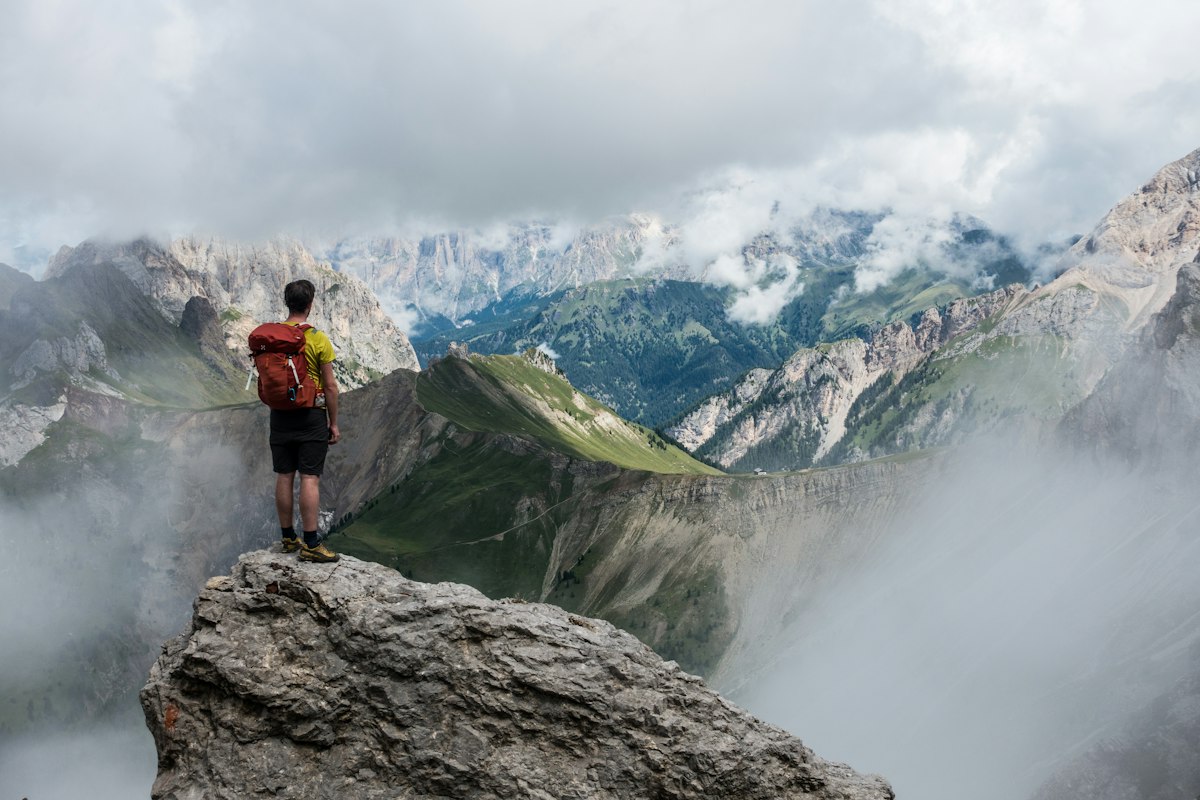
The hardest line at Cerro Catedral is not on the trail map. It starts above Punta Nevada chair at 2,100 metres, drops through a narrow couloir between two bands of volcanic rock, and commits you to 380 vertical metres of sustained 40-degree pitch before opening onto the treeline below. I've guided it more than 80 times. It still demands my full attention every single run.
What makes the off-piste above Punta Nevada so technical?
The terrain above Punta Nevada is the most demanding on-mountain terrain at Cerro Catedral accessible without a helicopter. The main couloir -- known informally among local guides as La Canal -- holds a sustained gradient of 38 to 42 degrees for its first 150 metres. The entry is a 1.5-metre rock step you cannot fully see until you are already committed. A fall at the top runs directly into a second rock band 80 metres below. We guide this line only on stable snow days with wind readings below 35 km/h at the summit.
What makes it harder than the gradient alone is the variable snow. Catedral's volcanic rock holds cold shadows, so the couloir often has wind crust on skier's left and untracked powder on skier's right within a 10-metre strip. You make your read on the fly.
What is the Reina Mora sector and why do guides value it?
Reina Mora is a broad, broken ridge system that extends east from the Punta Nevada summit area. Most resort guests never see it. It is reached by a 20-minute skin or bootpack from the top of the Punta Nevada chair, and it opens onto three distinct fall lines -- a forested couloir, an open north-facing bowl, and a long sustained pitch that exits above the Catedral base village.
We use Reina Mora when La Canal is wind-loaded or when a guest wants continuous vertical without the commitment of the couloir entry. On a good powder day, you can link 600 vertical metres of untracked snow from the ridge crest to the treeline. It is one of the best unguided-secret runs in South America and it sits 200 metres above the highest marked piste.
Who is ready for the hardest terrain at Cerro Catedral?
Honest answer: fewer people than think they are. The technical off-piste at Catedral is appropriate for skiers who can hold a carved turn at speed on 35-degree hardpack without braking, who have practiced avalanche rescue within the last 12 months, and who are comfortable making confident decisions in low-visibility conditions. A black-run skier who is strong on groomed runs is not necessarily ready.
We assess readiness over a half-day warmup on the marked black runs -- Martinica, Punta Nevada, and the steeper sections of Lynch -- before taking any guest off-piste. If someone hesitates on those runs, we redirect to a terrain tour that covers impressive scenery without the risk profile. There is no shame in that. The mountain has plenty to offer at every level.
What gear do guides carry on the serious terrain?
Every guide on our team carries a beacon, probe, and shovel as standard. For serious off-piste days above Punta Nevada we also carry a lightweight rope (30 m, 7 mm), anchor slings, and a compact first-aid kit with a SAM splint. Guests on our off-piste experiences are required to carry their own beacon, probe, and shovel -- we check these at the trailhead.
Skis matter more than most guests expect. We recommend a minimum waist width of 95 mm for spring conditions and 105 mm or wider for mid-winter powder. Narrow race skis and short rental carvers are not appropriate for this terrain.
What does a day guiding the hardest lines feel like?
You wake up early. The first thing I do every morning during guiding season is check the Catedral summit weather station -- wind speed, temperature, and the 24-hour snowfall reading. Then I check the national avalanche bulletin from SEGEMAR, which publishes a daily Patagonian forecast from June through September. If both look clean, I text my co-guide and we agree on a plan.
On the mountain by 9 a.m., before the lifts fill. A quick lap on a groomed run to feel the snow surface. Then up to Punta Nevada. The view from the entry point on a clear day stretches 80 km across the Lake District to the Chilean border -- Volcan Tronador on the left, Nahuel Huapi below, the city of Bariloche barely visible to the east. Then you drop in and the view disappears. For the next four minutes, there is only snow, speed, and line choice.
That's the job. It never gets boring.
Frequently Asked Questions
Can intermediate skiers access off-piste terrain at Cerro Catedral?
Yes -- there is a wide range of off-piste terrain at Catedral. The gentler powder fields off the Lynch and Nido de Condores chairs are appropriate for confident intermediate skiers with a guide. The serious couloirs above Punta Nevada are reserved for advanced and expert skiers with full avalanche equipment.
Is off-piste skiing at Cerro Catedral guided or self-guided?
Both are possible, but self-guided off-piste carries significant risk. The resort does not patrol or mark off-piste terrain, and avalanche conditions can change rapidly. Ski Patagonia Co. offers guided off-piste experiences with certified guides who know the current snowpack. First-timers to the mountain should always guide.
How much does a guided off-piste day at Cerro Catedral cost?
Guided off-piste days with Ski Patagonia Co. run from $280 to $450 USD per person depending on group size and terrain selection. All guides carry full rescue equipment and hold national guiding certifications. See our off-piste experience page or plan your trip for current pricing and availability.
What is the avalanche risk like at Cerro Catedral?
Catedral's avalanche risk is real but well-managed. SEGEMAR publishes daily forecasts during season. The most dangerous periods are 24 to 72 hours after a heavy snowfall, during strong wind events, and during spring warm cycles. Our guides use this data plus on-snow assessment to route guests around active hazard zones.
*This post was written by a senior guide on the Ski Patagonia Co. team, based on 11 seasons of guiding at Cerro Catedral and 14 years living and working in the Bariloche mountains.*
If you want to ski terrain like this with someone who knows every metre of it, we'd love to take you there. Start planning your trip and tell us your level -- we'll build a day that pushes you in the right direction.